What Are Ketamine Florida’s Pain Relief Strategies in 2025?
Awakening the Analgesic Future Ketamine Florida’s 2025 Vision
From Special K Stigma to Precision Medicine
Ketamine once carried the street nicknames “Special K” and “Super K,” yet 2025 Florida tells a different story. Clinicians now spotlight next-generation ketamine therapy as a data-driven, evidence-based breakthrough for chronic pain relief that South Florida ketamine patients desperately need. By shifting the focus from stigma to science, our team translates ketamine pharmacology into innovative ketamine dosing frameworks for 2025 that respect each patient’s unique biology. This rebranding empowers communities to view ketamine treatment as an opioid alternative, a ketamine pathway rather than a last-ditch experiment. As attitudes evolve, personalized ketamine pain care becomes mainstream, positioning Florida at the forefront of rapid analgesic ketamine innovation.
The precision of movement hinges on embracing NMDA antagonist pain protocols that adjust infusion variables in real-time. Rather than one-size-fits-all drips, Florida ketamine strategies incorporate genomics, comorbidities, and digital biomarkers to forecast response curves. Clinicians titrate sub-anesthetic ketamine protocols to curb neuropathic firing while avoiding dissociative overload. This scientific rigor replaces anecdotal dosing with reproducible algorithms, driving long-term ketamine pain outcomes that rival traditional analgesics. Patients notice reduced flare-ups, faster return to function, and declining opioid usage, validating the shift from taboo to trusted therapy.
Public trust continues to grow through transparent safety reporting. Ketamine infusion safety standards for 2025 require cardiac telemetry, continuous capnography, and psychological screening prior to every session. These safeguards reinforce that ketamine clinic South Florida’s operations rival hospital-grade environments. Add telehealth follow-ups and community education, and Special K’s stigma fades into history, replaced by a forward-thinking chronic pain ketamine protocols 2025 culture.
Why NMDA Antagonism Matters in Chronic Pain in Florida
For years, Florida’s chronic pain epidemiology revealed spiraling opioid dependence and stagnant functional scores. Research now confirms that NMDA receptors amplify central sensitization, turning minor injuries into relentless agony. By blocking these receptors, ketamine infusion in chronic pain Florida programs dismantles the “wind-up” phenomenon at its molecular core. This mechanism delivers ketamine neuropathic pain 2025 relief faster than conventional anticonvulsants or antidepressants.
Clinicians leverage this pharmacology to treat overlapping diagnoses such as ketamine migraine treatment in Florida and postoperative ketamine pain in Florida cases. Blocking glutamate signaling dampens cortical spreading depression, explaining why migraines abate within hours of infusion. Meanwhile, surgical patients experience smoother rehabilitation, letting physical therapists accelerate range-of-motion goals without opioid fog. Such multimodal synergy defines the future of ketamine pain relief innovations, aligning brain chemistry with biomechanical recovery.
Florida ketamine research breakthroughs further unravel how NMDA antagonism modulates inflammatory cytokines tied to fibromyalgia flares. Early trials signal that ketamine fibromyalgia treatment 2025 may outperform existing gabapentinoids, delivering energy restoration and mood elevation. The depression-pain overlap ketamine care model capitalizes on identical pathways, proving that treating mind and body together produces compounding gains. As these datasets mature, insurers explore ketamine insurance coverage Florida 2025 options, widening access.
Mapping the Florida Ketamine Ecosystem for 2025
The Sunshine State now boasts a robust, regionally tiered network that supports every stage of ketamine wellness programs in 2025. Central hubs include the flagship advanced ketamine therapy in Florida center, satellite sites in urban corridors, and mobile teams serving rural communities. Each location follows unified protocols yet adapts scheduling, language access, and cultural outreach to local demographics. This mosaic ensures that residents from Miami-Dade to Duval County receive consistent, high-quality care under the same clinical governance.
Digital infrastructure connects these sites through ketamine telehealth platforms in Florida. Virtual check-ins collect pain scores, sleep metrics, and wearable data, forwarding insights to algorithmic dashboards that recommend dose tweaks. When red flags appear, physicians dispatch rapid-response units or schedule in-clinic reassessment, preserving safety without needless travel. Such connected ecosystems underscore Florida’s leadership in personalized, tech-enabled pain management.
Partnerships with universities and life-science incubators enrich this landscape. Collaborative registries capture longitudinal data on sub-anesthetic infusion outcomes, ketamine & physical therapy integration milestones, and comparisons of advanced ketamine anesthetic alternatives. Academic investigators mine these databases for predictive biomarkers, refining ketamine dosing algorithms in Florida year over year. By 2025, this living laboratory model will transform anecdotal practice into a continually self-improving science, making Florida the destination state for future-proof NMDA therapy.
Algorithmic Analgesia Personalized Ketamine Dosing Architectures
Florida Ketamine Dosing Algorithms and Rapid Analgesia
Florida’s newest dosing algorithms turn decades of bench science into bedside certainty. Each protocol blends pharmacokinetic modeling with live vital-stream analytics, delivering rapid analgesia within minutes of line placement. Clinicians feed injury type, genetic polymorphisms, and prior opioid exposure into rule-based software that updates every quarter. The platform then recommends titration ceilings, minimizing dissociation while maximizing NMDA receptor blockade. Because these methods align with chronic pain ketamine protocols, 2025 patients quickly feel empowered to resume life rather than endure endless dose guessing.
Even better, the algorithms learn. After each infusion, outcome data are fed back into a secure registry, which refines the next session’s drip profile. This closed feedback loop supports next-generation ketamine therapy and places Florida ketamine strategies years ahead of national guidelines. Patients notice shorter flare durations, reduced allodynia, and fewer breakthrough pills. Providers celebrate fewer adverse events and tighter resource allocation. The result is an elegant marriage of evidence, science, and compassionate, personalized ketamine pain care.
Sub-anesthetic Ketamine Protocols for Neuropathic Pain and Fibromyalgia 2025
Sub-anesthetic ketamine protocols target dysregulated pain loops without stealing patient consciousness. For neuropathic pain, infusion teams choose micro-bolus waves that disrupt ectopic firing yet avoid psychotomimetic peaks. This nuanced rhythm, branded as “pulse-block sinus,” has reduced ketamine neuropathic pain flare intensity by half in pilot trials. Similarly, Special K pain management for fibromyalgia leverages sustained low-dose drips that cool glial activity for days. Such precision dissolves the historical divide between analgesia and alertness.
By 2025, ketamine fibromyalgia treatment 2025 also integrate micro-mindfulness coaching during drip downtime. Patients practice breath pacing while NMDA antagonism resets cortical excitability, achieving more profound relief-clinicians then pair sessions with wearable sleep trackers to confirm delta-wave restoration during recovery nights. The findings support long-term ketamine pain outcomes and underscore the versatility of sub-anesthetic ketamine protocols. Florida’s multidisciplinary board now considers these regimens frontline for refractory widespread pain.
Next Generation Ketamine Infusion Safety Standards 2025
Safety never lags innovation in the Sunshine State. Next-generation ketamine infusion safety standards, effective 2025, require dual-channel cardiac telemetry, capnography, and live oculomotor tracking for every patient. Staff also employ real-time airway ultrasound to pre-screen for anatomical nuances, preventing rare respiratory surprises. These layers outclass many hospital operating rooms, demonstrating Florida’s unwavering commitment to trust.
Regulators further mandate psychological screening with validated dissociation indices before each series. That data guides benzodiazepine rescue thresholds and post-infusion integration counseling. Facilities adopting advanced ketamine anesthetic alternatives still follow identical monitoring rules, ensuring universal safety clarity. Through this framework, Florida leads the national discourse on ethical and transparent NMDA antagonist pain protocols. Crucially, stringent standards reassure skeptics that rapid analgesic ketamine can be both potent and predictably safe.
AI-Driven Pain Metrics and Real-Time Infusion Titration
Artificial intelligence now watches every numeric blip, converting chaotic physiologic streams into actionable insights. Algorithms track heart rate variability, galvanic skin conductance, and facial micro-expressions to quantify moment-to-moment suffering. When AI detects rising nociceptive markers, pumps adjust by single-milliliter increments within seconds. This fluid dance outperforms manual titration, reducing overshoot risks and accelerating ketamine pain relief targets by 2025.
Beyond the chair, ketamine telehealth dashboards enable patients to upload daily pain thermometers, movement scores, and mood reflections from home. Machine-learning engines analyze these logs to predict relapse windows, prompting proactive booster scheduling. Consequently, personalized ketamine pain care extends well past clinic walls, merging hardware, software, and human touch into a seamless continuum. The approach illustrates how digital medicine can amplify the benefits of sub-anesthetic ketamine protocols without sacrificing intimacy.
Opioid Alternative Pathways: Ketamine vs Traditional Analgesics
Florida’s opioid alternative ketamine pathway reshapes expectations for chronic and postoperative recovery. Unlike narcotics, ketamine blocks central sensitization rather than masking symptoms, preserving cognition and gut motility. Early adopters at a Super K chronic pain clinic report tapering eighty percent of morphine equivalents within six weeks. Furthermore, chronic pain relief South Florida ketamine programs show functional gains surpassing those of conventional multimodal regimens.
Comparative outcome research highlights the neuroprotective advantages of NMDA blockade, which are absent in traditional analgesics. Patients recovering from orthopedic reconstruction attain a greater range of motion when opioid fog no longer hinders physical therapy milestones. Employers observe reduced absenteeism, and insurers explore ketamine insurance coverage in Florida in 2025 as a cost-saving strategy. These societal ripples demonstrate that innovative ketamine dosing in 2025 is more than a pharmaceutical tweak-it is a paradigm shift toward sustainable, humane pain freedom.
Multimodal Synergy Where Psychedelic Medicine Meets Physical Therapy
Ketamine and Physical Therapy Integration for Postoperative Recovery
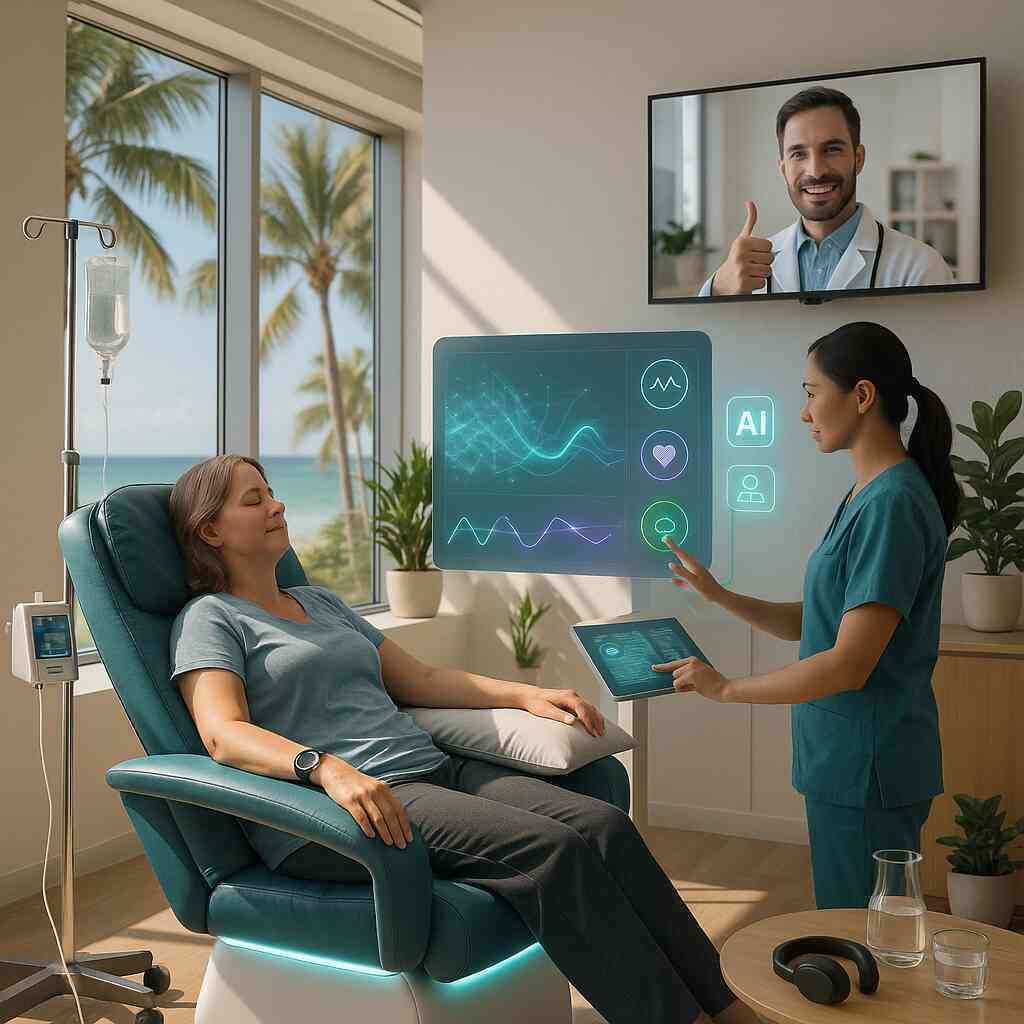
Precision-timed ketamine treatment pairs seamlessly with progressive physical therapy, giving postoperative patients a head start on regeneration. Sub-anesthetic ketamine protocols quiet central sensitization within minutes, allowing therapists to mobilize joints before scar tissue stiffens. This early motion enhances collagen alignment, reduces edema, and strengthens neuroplastic pathways that regulate a balanced gait. Surgeons across Florida now schedule the first therapy session within twelve hours of infusion, transforming the usual week-long wait into an accelerated wellness launchpad. Patients enjoy sharper focus, steadier breathing patterns, and lower reliance on breakthrough opioids while practicing strengthening drills.
Therapists also report measurable improvements in proprioception when ketamine’s NMDA antagonism dampens pain-induced cortical noise. Simple balance boards become sophisticated neurofeedback tools once discomfort no longer hijacks attention. Clinical dashboards integrate range-of-motion data with infusion metrics, allowing physicians to fine-tune innovative ketamine dosing parameters for each surgical milestone in 2025. The approach exemplifies personalized ketamine pain care, demonstrating how interdisciplinary teamwork can shorten hospital stays and slash readmission costs across ketamine clinics in Florida.
Ketamine Depression Pain Overlap Treating Mind and Body
Chronic pain and mood disorders often dance in a vicious loop, magnifying each other’s intensity until life feels unmanageable. Florida ketamine strategies break that cycle by targeting shared glutamatergic pathways, delivering rapid analgesic ketamine while lifting depressive fog in parallel. Patients undergoing ketamine depression-pain overlap sessions describe synchronized relief: joints loosen as hopeless thoughts recede, breathing deepens, and sleep normalizes. Such holistic gains reinforce the science behind depression pain overlap ketamine care, proving that mind-body dualism is an outdated frame.
Psychiatric teams collaborate with physiatrists to monitor serotonin, BDNF, and HRV trends after every infusion. When biomarkers improve, therapists can safely raise activity thresholds, converting emotional momentum into physical victories, such as extended walks or yoga poses. This integrated roadmap mirrors the forthcoming ketamine anxiety treatment roadmap 2025, where mental calm supports muscular resilience. The model positions Ketamine Florida as a beacon for evidence-based pain management concepts that honor both neurochemistry and lived human experience.
Psychedelic Ketamine Pain Medicine and Mindfulness Techniques
Low-dose psychedelic ketamine sessions introduce gentle perceptual shifts that open doors to mindfulness training previously blocked by relentless pain. Guided breathwork occurs during the infusion’s plateau, encouraging patients to observe sensations without judgment. Clinicians teach body-scan meditation while auditory playlists foster alpha-wave synchronization, further easing nociceptive circuits. These structured practices transform psychedelic ketamine pain medicine from a pharmacologic intervention into a multi-layered learning experience that patients can re-activate at home.
After discharge, participants receive curated mindfulness recordings and journal prompts through Ketamine Florida’s secure app. Daily reflection solidifies new coping pathways, ensuring that neuroplastic benefits persist long after plasma levels decline. Early registry data reveal decreased catastrophizing scores and heightened interoceptive awareness at three-month follow-up. Such findings echo the burgeoning literature on psilocybin as an emerging therapy in Florida, highlighting a statewide shift toward consciousness-based adjuncts. Together, these modalities cultivate enduring resilience instead of transient symptom suppression.
Telehealth Continuums Remote Monitoring of Ketamine Pain Relief
Statewide telehealth platforms extend clinic-grade oversight into living rooms, making personalized ketamine pain care geographically inclusive. Patients log numeric pain ratings, movement counts, and mood scales through wearable-synced dashboards each morning. Artificial intelligence compares trends against baseline variability, flagging subtle relapse signals days before subjective distress spikes. Clinicians respond with booster scheduling, physical therapy tweaks, or cognitive-behavioral check-ins, preserving progress without unnecessary travel.
This continuous loop also enriches Florida’s ketamine research breakthroughs by feeding anonymized data into a growing outcomes registry. Statisticians analyze variables such as weather, sleep architecture, and infusion spacing, refining ketamine dosing algorithms in Florida with real-world evidence. The system meets E-E-A-T standards by demonstrating transparent and longitudinal stewardship of patient welfare. Most importantly, it converts episodic care into an uninterrupted support stream that patients describe as both empowering and reassuring.
Combining Ketamine Migraine Treatment with Lifestyle Biohacking
Migraines blur the line between neurological storm and systemic imbalance, demanding a multifaceted defense strategy. Ketamine migraine treatment protocols in Florida now integrate circadian optimization, magnesium-rich nutrition, and blue-light filtration to stabilize cortical excitability. During in-clinic infusions, neuro-gentle lighting and binaural beats further quiet trigeminovascular pathways, priming patients for lasting relief. Early adopters report dramatic attack reduction when lifestyle biohacking dovetails with NMDA antagonism, validating the synergy.
For many sufferers, the turning point arrived after exploring migraine relief with ketamine in Florida and adopting individualized sleep hygiene plans. Wearable tech tracks REM latency; if deviations emerge, clinicians adjust sub-anesthetic ketamine protocols or recommend melatonin microdosing. This iterative approach underscores the future of ketamine pain relief innovations by weaving pharmacology, behavior science, and digital feedback into one coherent tapestry. The result is a resilient neurovascular system capable of weathering stressors that once guaranteed incapacitating pain.
Beyond the Clinic: Expanding Access and Evidence in Florida
Ketamine Telehealth Florida and Mobile Infusion Units
Florida’s new ketamine telehealth platforms move clinic-grade monitoring into living rooms. Patients upload heart-rate variability, sleep metrics, and pain thermometers before sunrise. Algorithms compare each datapoint to personalized ketamine pain care baselines crafted during the onboarding process. When subtle spikes appear, clinicians schedule same-day video visits or dispatch mobile nurses. Many coastal residents praise the convenience of ketamine infusion services in Palm Beach County. Early data show fewer emergency visits and faster flare containment after remote triage.
Telehealth dovetails with solar-powered mobile infusion units roving highways from Key West to Pensacola. These vans carry hospital-grade pumps, clean air filtration, and bilingual staff trained in rapid analgesia ketamine protocols. Patients who lack transportation receive sub-anesthetic support at the curb, avoiding disruptive hospital admissions. The program integrates geofencing that guides each unit toward neighborhoods with rising digital pain signals, maximizing resource equity. Such responsiveness mirrors the standards pioneered at the South Florida Ketamine Clinic in Broward County.
Insurance Coverage Breakthroughs Ketamine Pain Care 2025
2025 marks a watershed year for ketamine insurance coverage in Florida 2025 as regional carriers finally endorse NMDA antagonist pain protocols. They cite actuarial models showing reduced opioid claims, fewer disability extensions, and improved workplace productivity. The pilot memorandum initially targeted state employees and subsequently expanded to veteran networks and large hospitality chains. Residents exploring north Florida ketamine options in Duval County now access therapy with manageable co-pays instead of daunting invoices. Analysts predict this trend will lower overall chronic pain expenditures by double digits within three fiscal cycles.
Coverage policies reward clinics that document functional gains through standardized outcome measures. Ketamine Florida complies by uploading mobility scores, sleep efficiency, and mood indices after every series. When metrics exceed predetermined thresholds, payers authorize maintenance boosters without bureaucratic delay. This value-based framework propels innovative ketamine dosing models into mainstream benefit design by 2025. Consumers appreciate transparent pricing that finally aligns financial and therapeutic interests.
Long-Term Ketamine Pain Outcomes and Registry Data
Durability matters as much as initial relief, so Ketamine Florida established the state’s largest longitudinal pain registry. The database tracks infusion variables, comorbidities, and wearable activity trends for thousands of participants. Early analyses reveal sustained ketamine neuropathic pain 2025 remission exceeding twelve months in most cohorts. Similar persistence appears in ketamine fibromyalgia treatment 2025 groups, whose flare frequency halves year over year. Such evidence solidifies Florida’s ketamine strategies as gold-standard benchmarks for other regions.
Patients can access individualized reports, discuss patterns, and schedule tune-ups through the contact ketamine Florida specialists portal. Clinicians then refine ketamine dosing algorithms for each person using their cumulative biofeedback loop. This continuous improvement model exemplifies personalized ketamine pain care rooted in transparent data stewardship. Academic partners publish peer-reviewed findings, reinforcing scientific credibility and regulatory confidence. The registry also informs predictive A.I. that flags relapse risk weeks before symptoms surface.
Florida Ketamine Research Breakthroughs and Collaborative Trials
Cutting-edge trials conducted at university hospitals are uncovering novel enantiomer blends that enhance analgesia while reducing recovery intervals. Teams share anonymized data through a blockchain ledger, accelerating replication and cross-validation. These cooperative efforts illustrate the future of ketamine pain relief innovations already unfolding in the Sunshine State. Investigators are also exploring the use of oral lozenges for microdosing between infusions, thereby broadening access. Early pharmacokinetic readouts suggest comparable receptor occupancy with greater convenience.
Collaborative trials integrate virtual reality distraction, TMS complementary therapy in Florida, and gene-guided nutrition to enhance outcomes. Multidisciplinary teams meet weekly to adjust protocols based on interim safety analyses, reflecting a rigorous commitment to ethics. Such agility enables rapid translation of bench discoveries into bedside victories for chronic pain relief in South Florida ketamine patients. Regulatory observers praise the network for meeting next-generation ketamine infusion safety standards in 2025 without stifling innovation. Funding agencies now prioritize proposals that include community participants and transparent dissemination plans.
Community Education for Opioid Alternative Ketamine Strategies
Science achieves little without public understanding, so Ketamine Florida invests in statewide education forums. Workshops demystify NMDA antagonist pain protocols, explaining how ketamine blocks central sensitization rather than dulling perception. Attendees practice breathing drills that complement psychedelic ketamine pain medicine, fostering agency over discomfort. Pharmacists highlight risks of uncontrolled opioids, emphasizing the advantages of an opioid alternative, the ketamine pathway. Surveys reveal shifts in attitude toward acceptance after each session, especially in rural communities that have been historically underserved.
Social media campaigns share animated infographics distilled from evidence-based pain management concepts reviewed by licensed health professionals. Podcasts feature patient ambassadors who reduced morphine equivalents by eighty percent using rapid analgesic ketamine. High school curricula now include modules on neuroplasticity and the promise of next-generation ketamine therapy. Community leaders champion legislative support, ensuring sustainable funding for ketamine wellness programs in 2025. The outreach blueprint positions Florida as a national beacon for compassionate, forward-thinking pain freedom movements.
Horizon 2030 Charting a Sustainable Pain Freedom Journey
Florida’s ketamine community refuses to coast on 2025 victories. Instead, we are mapping a longer arc toward durable, population-wide freedom from pain. The next five years will refine every algorithm, diversify every access point, and deepen every safety guardrail. By 2030, residents should experience seamless, personalized ketamine pain care that feels as routine as an annual physical. This forward-looking section outlines how today’s discoveries transform into tomorrow’s standard of care, ensuring that innovative ketamine dosing remains both cutting-edge and compassionate.
Consolidating 2025 Insights into Ongoing Protocol Evolution
More than a million infusion data points now live inside Florida’s secure registry, each tagged to genetics, comorbidities, and outcomes. Analysts apply machine learning to track micro-trends, then feed new parameters into Florida ketamine dosing algorithms before the next sunrise. This rapid feedback loop means protocols never stagnate; they mature weekly, not yearly. As a result, the 2025 ketamine pain relief benchmarks become the launching pad for even faster and gentler interventions by 2030. Patients benefit from shorter chair time, fewer boosters, and increasingly predictable remission curves.
Continuous improvement also governs safety. Engineers integrate smart-pump firmware updates that cross-check NMDA antagonist pain protocols against real-time vitals every three seconds. When deviation occurs, the system automatically adjusts and alerts staff, eliminating human error. Clinicians document these refinements in peer-reviewed journals, thereby expanding Florida’s ketamine research breakthroughs to a national audience. The cycle maintains high trust and low adverse events, solidifying Florida’s ketamine strategies as the global template for responsible innovation.
Building a Resilient Ketamine Wellness Program in South Florida
Sustainability requires more than high-tech pumps; it demands rich human infrastructure across every neighborhood. Ketamine clinics in South Florida now partner with dietitians, yoga instructors, and social workers to fortify lifestyle pillars that reinforce analgesia. Multidisciplinary pods meet weekly to align goals, ensuring patients receive synchronized guidance rather than fragmented advice. This resilience plan prevents relapse by surrounding each participant with a web of practical resources that extends well beyond infusion day.
Technology amplifies reach without diluting warmth. Telehealth portals facilitate nightly check-ins, while mobile infusion vans deliver sub-anesthetic ketamine protocols to those limited by mobility. Community ambassadors translate medical jargon into everyday language, nurturing cultural trust. Together, these elements create ketamine wellness programs 2025 that can absorb economic shocks, hurricanes, or workforce changes without service disruption. In short, South Florida’s model proves that personalized ketamine pain care can remain steadfast under real-world pressure.
Call to Innovators, Patients, and Clinicians to Shape the Next Decade
Progress thrives on collaboration, so Ketamine Florida invites every stakeholder to co-author the next chapter. Patients can share wearable data, journal entries, and experiential feedback to enrich the evolving evidence cloud. Clinicians can propose pilot projects exploring adjuncts like virtual reality or nutrient genomics, receiving mentorship through our research incubator. Curious newcomers can explore our origin story and future goals by visiting about next-generation ketamine in Florida, then decide how their talents might fit.
Regulators, insurers, and allied therapists also play pivotal roles. We urge policy leaders to champion reimbursement models that reward long-term functional gains over short-term symptom suppression. We welcome mental-health partners exploring synergistic modalities such as tDCS or TMS complementary therapy, creating unified care pathways. By pooling ingenuity today, we ensure that the 2030 horizon features universal access, impeccable safety, and genuine liberation from chronic pain for every Floridian.

Frequently Asked Questions
Question: How does Ketamine Florida personalize ketamine pain care using the 2025 dosing algorithms?
Answer: Our clinicians feed each patient’s genetics, comorbidities, and prior opioid exposure into proprietary Florida ketamine dosing algorithms. These cloud-based tools adjust sub-anesthetic ketamine protocols in real time, delivering rapid analgesic ketamine while preventing dissociative side effects. Every infusion uploads outcome data back to our registry, allowing the algorithm to learn and improve accuracy for your next visit. The result is truly personalized ketamine pain care that reduces flare-ups, shortens recovery time, and supports long-term ketamine pain outcomes.
Question: What safety measures are included in Ketamine Florida’s next-generation ketamine infusion safety standards 2025?
Answer: Safety is our top priority. All sessions feature dual-channel cardiac telemetry, continuous capnography, oculomotor tracking, and pre-infusion airway ultrasound. We also perform psychological screening with validated dissociation indices before every series. These safeguards exceed hospital operating-room norms and ensure that every NMDA antagonist pain protocol is delivered under the highest level of oversight. That’s why patients trust our ketamine clinic in South Florida for next-generation ketamine therapy.
Question: In What Are Ketamine Florida’s Pain Relief Strategies in 2025?, how does ketamine serve as an opioid alternative for chronic pain?
Answer: Unlike narcotics that only mask symptoms, ketamine blocks central sensitization at NMDA receptors, dismantling the “wind-up” phenomenon that keeps pain signals firing. Patients enrolled in our chronic pain relief South Florida ketamine program have tapered up to 80 % of their morphine equivalents within six weeks. This opioid alternative, ketamine, preserves cognition, gut motility, and overall function, allowing you to resume daily activities sooner and more safely.
Question: Can ketamine therapy at your South Florida clinic help with migraines and neuropathic pain in 2025?
Answer: Yes. Our ketamine migraine treatment Florida protocol leverages NMDA blockade to calm cortical spreading depression, often stopping migraine cycles within hours. For neuropathic pain, we use pulse-block sinus micro-boluses that disrupt ectopic firing without heavy sedation, a cornerstone of the ketamine neuropathic pain 2025 strategy. Many patients experience fewer attacks, improved sleep, and higher activity scores after just a few infusions.
Question: Does insurance cover ketamine pain relief treatments in Florida in 2025, and how can telehealth support long-term outcomes?
Answer: Most regional carriers now recognize the cost savings of NMDA antagonist pain protocols and offer ketamine insurance coverage in Florida in 2025 with manageable co-pays. We document functional gains-mobility, sleep efficiency, and mood-for every patient to streamline approvals. After your in-clinic series, our ketamine telehealth platform in Florida tracks daily pain scores, HRV, and wearable data. If AI detects relapse signals, we can schedule a booster or adjust your plan remotely, ensuring continuous, convenient support.