
Guide to Ketamine Florida Family Therapy Aftercare in 2026
When family support helps and when it starts getting in the way after ketamine therapy
If depression has made your home feel tense, quiet, or fragile, post-treatment support can feel confusing fast. You may want to help, but not smother. That tension is common after ketamine therapy, especially when mood shifts happen quickly and everyone is still trying to make sense of them.
The best ketamine therapy aftercare in Florida usually starts with one simple idea: support should stabilize, not monitor every breath. Families often worry that doing less means they do not care. In reality, overchecking can make recovery feel like a performance. A steadier rhythm gives the nervous system room to settle.
Here is the part most people miss. The goal is not to become your loved one’s therapist. The goal is to reduce friction, notice warning signs, and keep daily life predictable while healing continues.
The signs that home support is helping mood stability instead of quietly overwhelming it
Healthy family support feels calm, specific, and repeatable. It sounds like, “Do you want quiet or company?” rather than “Tell me everything right now.” It also respects sleep, hydration, meals, and the need for low stimulation after ketamine infusions. If your house has fewer arguments and more ordinary routines, that is usually a good sign.
By contrast, support becomes overwhelming when every symptom gets a meeting. A little fatigue after ketamine treatment is not always a setback. A need for silence is not rejection. If you are tracking every facial expression, the room can start feeling unsafe even when recovery is moving in the right direction.
One family in Broward County told us their evenings improved when they stopped asking for a “report” after every session. They switched to a simple check-in, then left room for a walk, a shower, and an early bedtime. That small change reduced conflict more than any long conversation had.
Why dissociation and the psychedelic experience can make loved ones misread normal aftercare needs
Dissociation can look odd from the outside. A person may seem distant, dreamy, slowed down, or unusually quiet after ketamine therapy. That does not automatically mean something is wrong. It often reflects the medication’s effect on perception, not a personal withdrawal from family.
The psychedelic experience can also create misunderstanding. Loved ones may hear a patient talk differently about memories, fear, or hope after guided sessions. That shift can sound dramatic, but it often reflects neuroplasticity and emotional processing. Ketamine acts as an NMDA receptor antagonist, and that mechanism may open a window for new patterns of thinking. Families should not force meaning too early.
This is where ketamine side effects and safety planning matters. Some short-term changes are expected. Excessive confusion, unsafe behavior, or a growing inability to function is different. If you cannot tell the difference, ask the clinic for guidance rather than guessing at home.
What changes in communication after ketamine infusions often mean for depression, PTSD, and anxiety recovery
Communication often changes before behavior does. A person with major depressive disorder may finally answer more directly. Someone with PTSD may talk less around trauma and more around safety. Anxiety can show up as fewer reassurance-seeking texts, or sometimes as temporary irritability while the nervous system recalibrates.
That does not mean every new sentence is progress. It means the emotional field is shifting. Families should listen for steadier tone, better timing, and more tolerance for ordinary uncertainty. In treatment-resistant depression, those subtle changes can matter more than dramatic declarations.
We hear this from clients almost every week. The family wants a rulebook, but recovery rarely gives one. You do better by watching patterns over several days, not one emotional moment.
What actually belongs in ketamine Florida family therapy aftercare
Family therapy aftercare should be practical, not theatrical. It needs structure, honest communication, and enough flexibility to match the person’s condition. In a good plan, everyone understands the aftercare role without overpromising a cure. That matters for depression, anxiety, PTSD, OCD, bipolar depression, and chronic pain alike.
A strong family therapy aftercare for ketamine recovery plan usually includes education, coping tools, and clear next steps. It also leaves room for medical oversight. Ketamine treatment is not a substitute for all ongoing care. It works best as part of a larger recovery framework.
How integration therapy after ketamine turns a powerful session into usable daily coping
Integration therapy after ketamine helps translate insight into action. Without it, a meaningful session can fade into a memory with no traction. With it, a person can turn a breakthrough into a sleep routine, a boundary, or a better response to panic.
This is especially helpful after IV ketamine, oral ketamine, or intramuscular ketamine, because the experience can feel intense and brief. The point is not to chase the feeling. The point is to use it. If a patient says, “I finally see my triggers clearly,” integration therapy helps them decide what to do next.
One patient in Palm Beach County described a session as “opening a window.” What helped most was not the session itself. It was the next conversation, where the family agreed on fewer late-night arguments, shorter check-ins, and a written plan for hard days.
Where cognitive behavioral therapy, DBT, and holistic therapy fit into recovery support
Cognitive behavioral therapy can help families identify thought loops that keep panic or hopelessness alive. DBT can strengthen emotional regulation, especially when moods swing fast or conflict escalates at home. Holistic therapy can support sleep, movement, nutrition, and stress reduction without pretending those tools replace medical care.
These approaches fit well beside ketamine clinic Florida aftercare because they work on habits, not just symptoms. CBT can help a person notice catastrophizing. DBT can help them pause before reacting. Holistic therapy can help the body feel safer, which often supports the mind.
A simple table can help families see the difference:
Support toolMain purposeBest use at homeCBTReframe unhelpful thoughtsDaily thought check-insDBTBuild emotional regulationConflict pauses and groundingHolistic therapySupport body-based recoverySleep, food, movement, breathwork### Why medication management and psychiatric evaluation still matter after ketamine treatment
Ketamine may create space for change, but it does not eliminate the need for follow-up care. Medication management still matters if the person takes antidepressants, mood stabilizers, sleep medication, or anxiety medication. A psychiatric evaluation after ketamine treatment can clarify whether the current plan still fits.
This matters for TRD, bipolar depression, PTSD, and OCD, where symptoms may shift in layers. The clinic may need to adjust timing, dosage, or the broader treatment sequence. Families should not change medications on their own.
The safest plans are coordinated. That coordination becomes even more important when there is chronic pain, suicidal thinking, or a history of partial response. Family therapy works better when everyone understands that observation is useful, but prescribing belongs to clinicians.
How ketamine-assisted psychotherapy and family education work together without overpromising outcomes
Ketamine-assisted psychotherapy can be powerful when the setting is structured and the expectations are realistic. It gives patients a chance to explore patterns with support, often with guided sessions that build safety and meaning. Family education then helps loved ones understand what happened, what did not happen, and what still needs attention.
This is where the language matters. “Promising” is not the same as “guaranteeing.” Ketamine-assisted psychotherapy may support trauma recovery, but it does not erase trauma. It may help mood disorders, but it does not replace follow-up care or healthy routines. That honesty protects trust.
ketamine-assisted psychotherapy for lasting recovery works best when the family knows how to support the process without turning it into a test. The most helpful homes ask better questions. They ask what the person needs, what to avoid, and what the next appointment should cover.
The Florida aftercare map that protects recovery from Miami to Jacksonville
Florida families often juggle distance, traffic, work schedules, and heat that can drain energy quickly. That makes aftercare logistics more important than people expect. A plan that works in one county may feel impossible in another if travel time, childcare, or weekend schedules get in the way.
The good news is that Florida mental health aftercare planning can be adapted to real life. Miami, Fort Lauderdale, West Palm Beach, Orlando, Tampa, Jacksonville, and surrounding areas all bring different rhythms. Your plan should fit your actual week, not an idealized one.
Why South Florida families often need a different support rhythm than patients in Orlando or Tampa
South Florida families often deal with denser traffic, longer commute stress, and more layered caregiving schedules. That means support may need to be shorter, more frequent, and easier to repeat. In Orlando or Tampa, the challenge may be different, with broader travel distances between clinic visits or family members spread across neighborhoods.
The rhythm should match the person’s symptoms and the household’s pace. A patient with anxiety may need quieter mornings. Someone managing chronic pain may need more flexibility after appointments. Families in Miami or Fort Lauderdale often benefit from planning around rush hour and building in recovery time afterward.
This is where local knowledge helps. A plan that ignores traffic near I-95 or the strain of crossing town after treatment can fall apart by dinner. The best aftercare plan respects geography.
How telehealth ketamine follow-up and Florida mental health care can extend support between visits
Telehealth ketamine follow-up can bridge gaps when in-person visits are not practical. It is useful for symptom check-ins, family coaching, and reviewing side effects ketamine concerns without adding travel stress. For many families, that extra contact helps keep the plan steady.
Telehealth also supports continuity when a patient is balancing work, school, or caregiving. It can help a family revisit coping tools before small problems grow. That is especially useful for trauma recovery, anxiety aftercare planning, and bipolar depression stabilization.
What we have seen in 2026 specifically is that families use telehealth best when they prepare one short list before the call. They ask about sleep, mood, appetite, safety, and any confusion. That keeps the conversation focused and useful.
What local families should know about driving after ketamine treatment and same-day safety planning
Driving after ketamine treatment is not something to improvise. Patients should follow the clinic’s instructions and avoid driving if they are still sedated, dizzy, or mentally foggy. A same-day plan should include transportation, a quiet recovery space, and no pressure to resume normal errands immediately.
This is a common source of tension. A spouse may think, “You look fine.” But “looking fine” is not the same as being fully alert. Ketamine therapy side effects can include dissociation, slower reaction time, or mild nausea. Safety should win over convenience.
A strong plan includes:
- A designated driver or rideshare
- No alcohol or other sedating substances
- No major decisions that day
- A calm home environment
- A quick contact number for questions
How insurance coverage ketamine questions and self-pay ketamine options usually shape aftercare decisions
Insurance coverage ketamine discussions often influence how often families can schedule follow-up care. Some plans may cover parts of treatment, especially for FDA-approved Spravato esketamine, while other forms of ketamine therapy may be self-pay or involve partial coverage depending on the plan. Coverage can change, and policies vary. That is why families should ask about benefits early. They should also ask about any financial assistance ketamine options, sliding scale possibilities, or self-pay ketamine arrangements if coverage is limited. The answer may affect session spacing, follow-up frequency, and whether telehealth is used more often. 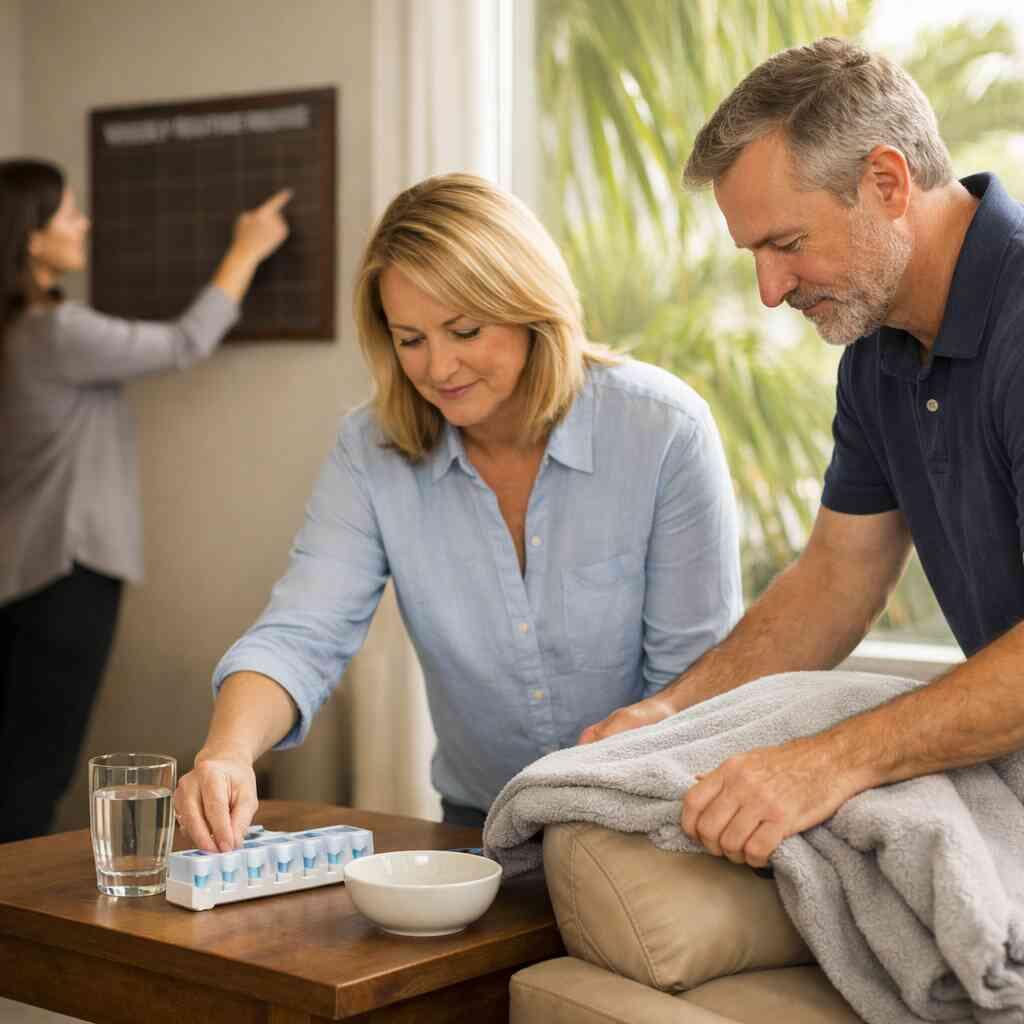
Ketamine Florida can help families think through the care plan before finances become a crisis. Cost matters. Predictability matters even more. A clear estimate, even if incomplete, helps reduce fear and keeps recovery focused on care.
When ketamine recovery is really about substance use, not mood treatment
Sometimes the hardest part is admitting that the issue is not only depression or pain. If ketamine is being used outside medical guidance, the picture changes. Then family therapy aftercare must shift toward substance use treatment, not just mood support.
That distinction matters because therapeutic ketamine treatment and recreational misuse are not the same. The risks, goals, and level of care differ. If you are seeing secrecy, escalating use, or behavioral changes tied to access, the safest response is to pause and reassess quickly.
ketamine addiction recovery and Special K abuse should be approached with care and without shame. Shame rarely helps. Clear action usually does.
How to tell the difference between therapeutic ketamine treatment and Special K addiction patterns
Therapeutic ketamine treatment happens in a supervised setting, with medical oversight and a defined purpose. Special K addiction patterns usually involve seeking dissociation, euphoria, or escape outside treatment. The person may start prioritizing access over safety, honesty, or responsibilities.
Watch for red flags like:
- Using more often than prescribed
- Asking for lost medication repeatedly
- Hiding use from family
- Chasing the dissociative effect
- Neglecting work, school, or parenting
Special K addiction can begin quietly. It may look like self-medication at first. Over time, it can become a pattern that damages memory, judgment, and relationships.
Why ketamine withdrawal, ketamine overdose risk, and bladder cystitis ketamine concerns change the plan
Ketamine withdrawal can include irritability, cravings, sleep disruption, and emotional instability. Ketamine overdose risk rises when the substance is mixed with other depressants or taken in unsafe amounts. Bladder cystitis ketamine and urinary tract damage are also real concerns with repeated misuse.
Those risks change the care plan fast. A person who is misusing ketamine may need medical evaluation, not just counseling. The body may be signaling harm long before the person admits the severity. Cognitive effects can also include attention problems and memory issues that interfere with daily life.
If the pattern feels complicated, treat it as complicated. That is not overreacting. It is responsible care.
When rehab for ketamine, detox, residential treatment, or an outpatient program makes more sense
The right level of care depends on safety, severity, and support at home. Rehab for ketamine may start with detox if the person is medically unstable or using heavily. Residential treatment can help when the home setting is too chaotic or triggering. An outpatient program may fit if the person is stable enough to live at home and attend structured care.
The ASAM framework helps clinicians think about level of care, but families can still use simple questions. Can the person stay safe? Can they stop using on their own? Can the home support recovery without constant conflict? If the answer is no, a higher level of care may be needed.
For some families, the correct move is a brief outpatient program. For others, residential treatment is the safer path. There is no prize for choosing the least intensive option.
How dual diagnosis care connects family therapy, relapse prevention, and emotional stabilization
Dual diagnosis care becomes important when substance use and mental health symptoms overlap. A person may be living with depression, PTSD, anxiety, or bipolar depression while also misusing ketamine. In that case, family therapy must support both relapse prevention and emotional stabilization.
That means no false separation. The substance use may intensify mood swings, and the mood swings may fuel substance use. Dual diagnosis aftercare and family support works best when both sides are addressed at once. Ketamine treatment recovery support for families should include education on triggers, routines, and crisis planning.
Relapse prevention is not only about saying no. It is also about reducing isolation, improving sleep, and building structure around hard hours of the day.
What loved ones should watch for with ketamine addiction, Super K abuse, and cognitive effects
Loved ones often notice changes before the person does. You might see slower speech, missed appointments, misplaced items, or a foggy attention span. Super K abuse can also bring mood swings, irritability, and social withdrawal. Those cognitive effects can look like apathy, but they may reflect substance-related harm.
Here is what almost no online guide mentions: families sometimes mistake withdrawal from home life as a personality problem. It may be a safety problem instead. If someone becomes secretive around medication, money, or time away from home, pay attention.
Do not wait for a perfect crisis. Ask for help earlier. If you suspect misuse, involve a clinician who understands ketamine addiction recovery and can recommend the right next level of care.
What to do next when your household needs a steadier plan
The next move does not need to be dramatic. It needs to be clear. If your family feels stuck between helping and hovering, set one conversation, one goal, and one follow-up. That alone can reduce pressure.
You can also compare treatment paths, including ketamine treatment for depression in Florida, if the household is still sorting out the medical side. Some families need mood support. Others need substance use care. Many need both.
How to ask for a family meeting after ketamine therapy without turning it into a conflict
Start with purpose, not blame. Say you want a calmer plan, not a debate. Keep the meeting short, and choose a time when nobody is rushed, hungry, or exhausted. That lowers the chance of escalation.
Bring three topics:
- What is helping right now.
- What feels hard at home.
- What the next week should look like.
If emotions run high, pause and reset. A family meeting should clarify, not punish. The tone matters as much as the content.
What to bring up about aftercare, safety ketamine planning, and long-term effects ketamine concerns
Ask about sleep, appetite, mood, and alertness. Ask whether dissociation, nausea, or cognitive effects are expected at this point. Ask what would count as a warning sign. Families often feel embarrassed asking basic questions, but basic questions prevent preventable problems.
Long-term effects ketamine concerns should be discussed openly, especially if treatment is ongoing. The clinic can explain what is known, what is still being studied, and what symptoms need follow-up. If someone has bladder symptoms, memory changes, or worsening confusion, say so directly.
Safety planning should also include transportation, medications, and contact numbers. That is not overplanning. That is care.
When to ask about Spravato esketamine, IV ketamine vs Spravato, or oral ketamine follow-up
Ask about Spravato esketamine when insurance coverage, monitoring, or FDA-approved treatment matters to the decision. Ask about IV ketamine vs Spravato if you want to compare onset, setting, and access. Spravato is FDA-approved for certain depressive conditions, while IV ketamine is often off-label. That difference can affect coverage and clinic workflow.
A simple comparison helps:
OptionSettingCoverage considerationsCommon useIV ketamineClinical infusionOften self-pay or partial coverageRapid symptom supportSpravato esketamineSupervised nasal treatmentMore likely to have insurance pathwaysTRD and depressive symptomsOral ketaminePrescribed formCoverage varies widelyFollow-up in select casesIf the family is asking about next steps, mention oral ketamine follow-up too. The right choice depends on diagnosis, safety, and access.
How to use Florida ketamine aftercare to build momentum without forcing a perfect recovery path
Recovery rarely moves in a straight line. Some weeks feel lighter. Some feel heavy again. The point is to keep the household moving in a useful direction, even when the pace is uneven. That means fewer assumptions, more clarity, and more follow-through.
You can use Florida ketamine aftercare to build momentum by staying consistent with appointments, home routines, and communication. Keep the plan realistic. Keep the ask small. And keep the focus on safety, not perfection.
If you need help sorting whether your next step is family therapy, follow-up medication review, or substance use care, reach out to Ketamine Florida. Start with one phone call, one question, and one honest conversation about what your home needs most right now.
Frequently Asked Questions
Question: What does ketamine therapy aftercare usually include for families in Florida, and how does Ketamine Florida support family therapy aftercare?
Answer: Ketamine therapy aftercare usually focuses on keeping recovery steady, safe, and predictable rather than turning home support into constant monitoring. For families, that often means setting simple check-ins, protecting sleep and hydration, reducing conflict, and watching for changes in mood, alertness, or safety. Ketamine Florida emphasizes practical ketamine treatment recovery support that fits real life in Florida, including communication skills for families, family education on ketamine recovery, and clear guidance on when to contact the clinic for follow-up.
Question: In the Guide to Ketamine Florida Family Therapy Aftercare in 2026, how should loved ones respond to dissociation after ketamine treatment or a psychedelic experience?
Answer: Dissociation after ketamine treatment can look unusual from the outside, but it does not automatically mean something is wrong. A person may seem quiet, dreamy, or emotionally distant for a period after ketamine infusions, IV ketamine, oral ketamine, or intramuscular ketamine. Loved ones should respond with calm, low-pressure support instead of forcing conversation or interpretation. At Ketamine Florida, we encourage families to focus on safety after ketamine therapy, give the nervous system time to settle, and ask the clinic for guidance if confusion, unsafe behavior, or worsening functioning appears. That kind of support helps protect treatment progress while respecting neuroplasticity and healing.
Question: How do integration therapy after ketamine, ketamine-assisted psychotherapy, CBT, and DBT fit into recovery support for TRD, PTSD, anxiety, or bipolar depression?
Answer: Integration therapy after ketamine helps patients turn a powerful treatment moment into usable daily coping. For people living with treatment-resistant depression, major depressive disorder, PTSD, anxiety, OCD, or bipolar depression, the most meaningful gains often come from what happens after the session. Ketamine-assisted psychotherapy can help patients explore patterns in guided sessions, while cognitive behavioral therapy for recovery can challenge unhelpful thought loops and DBT for emotional regulation can strengthen pause-and-respond skills at home. Holistic therapy for healing may also support sleep, movement, and stress reduction. Ketamine Florida uses this broader framework because ketamine treatment works best when medical care, psychotherapy, and family support are coordinated instead of treated as separate steps.
Question: What should Florida families know about safety after ketamine therapy, including driving after ketamine treatment, side effects of ketamine therapy, and long-term effects of ketamine?
Answer: Safety planning is a major part of aftercare. Patients should not drive after ketamine treatment unless the clinic has clearly indicated they are fully alert and fit to do so; sedation, dizziness, dissociation, or slowed reaction time can still be present. Common side effects of ketamine therapy may include nausea, temporary confusion, fatigue, or emotional sensitivity, and those should be monitored without overreacting. Long-term effects of ketamine are an important discussion point too, especially with repeated treatment or if there are bladder symptoms, memory changes, or concern for urinary tract damage or bladder cystitis ketamine. Ketamine Florida encourages families to ask about these concerns openly, follow medical instructions carefully, and use medication management follow-up or psychiatric evaluation after ketamine if anything seems off.
Question: How do families tell the difference between therapeutic ketamine treatment and ketamine addiction, Special K addiction, or Super K abuse?
Answer: The biggest difference is structure, purpose, and oversight. Therapeutic ketamine treatment is delivered in a supervised clinical setting with a clear mental health or pain management goal. Ketamine addiction, Special K addiction, or Super K abuse usually involves using ketamine to chase dissociation, escape, or euphoria outside of medical guidance. Warning signs can include secrecy, escalating use, requests for early refills, neglect of responsibilities, cravings, or withdrawal symptoms such as irritability and sleep disruption. If misuse is suspected, Ketamine Florida recommends acting early and getting a professional assessment because the right response may include detox, rehab for ketamine, residential treatment, or an outpatient program, depending on severity and safety. This is also where dual diagnosis care matters, because mood disorders and substance use can reinforce each other.
Question: What should families ask Ketamine Florida about follow-up care, insurance coverage ketamine, self-pay ketamine, and the best option between IV ketamine vs Spravato?
Answer: Families should ask about follow-up care, expected monitoring, and how the clinic coordinates aftercare across Florida mental health support needs. It is also wise to ask about insurance coverage ketamine and whether Spravato esketamine, which is FDA-approved for certain depressive conditions, may have different coverage pathways than off-label ketamine options such as IV ketamine or oral ketamine. If cost is a concern, families can ask about self-pay ketamine, private pay, sliding scale, or financial assistance ketamine options if available. Comparing IV ketamine vs Spravato also helps families understand differences in setting, access, and logistics. Ketamine Florida can help patients and loved ones think through these choices without making promises about outcomes, so the plan stays grounded, informed, and realistic.