
Comparing Ketamine Florida’s PTSD Solutions Across Florida Counties
Dawn of a Rapid Relief Renaissance in Florida PTSD Care
Treatment resistant PTSD and the need for NMDA antagonist innovation
Florida clinicians observe that treatment-resistant PTSD remains the most stubborn mental health barrier in the Sunshine State. Conventional pharmacology often stalls, leaving veterans and survivors trapped in hyper-arousal cycles. As research pivots toward NMDA antagonists, ketamine shines for its rapid synaptic reset that promotes neuroplastic healing within hours. Many Floridians now seek NMDA antagonist rapid PTSD relief, trusting the Special K therapeutic protocol Florida experts refine daily. For readers needing deeper insight, the phrase Rapid ketamine PTSD relief statewide in Florida offers a thorough primer on the mechanism and statewide application.
A decade ago, few predicted psychedelic-adjacent medicines would dominate psychiatric headlines. Yet escalating suicide statistics forced policymakers to chase faster, evidence-based interventions. Ketamine treatment Florida for PTSD gained legitimacy through rigorous double-blind trials and emergency-department adoption. Today, mental health administrators recognize that intravenous ketamine can stabilize intrusive memories before they crystallize. Because doses act on glutamate, downstream cortisol spikes markedly decline, and patient sleep cycles often normalize within days. This innovation fills a life-saving gap when psychotherapy alone cannot control flashbacks or self-harm ideation.
Ketamine Florida clinic ethos and the science of Special K
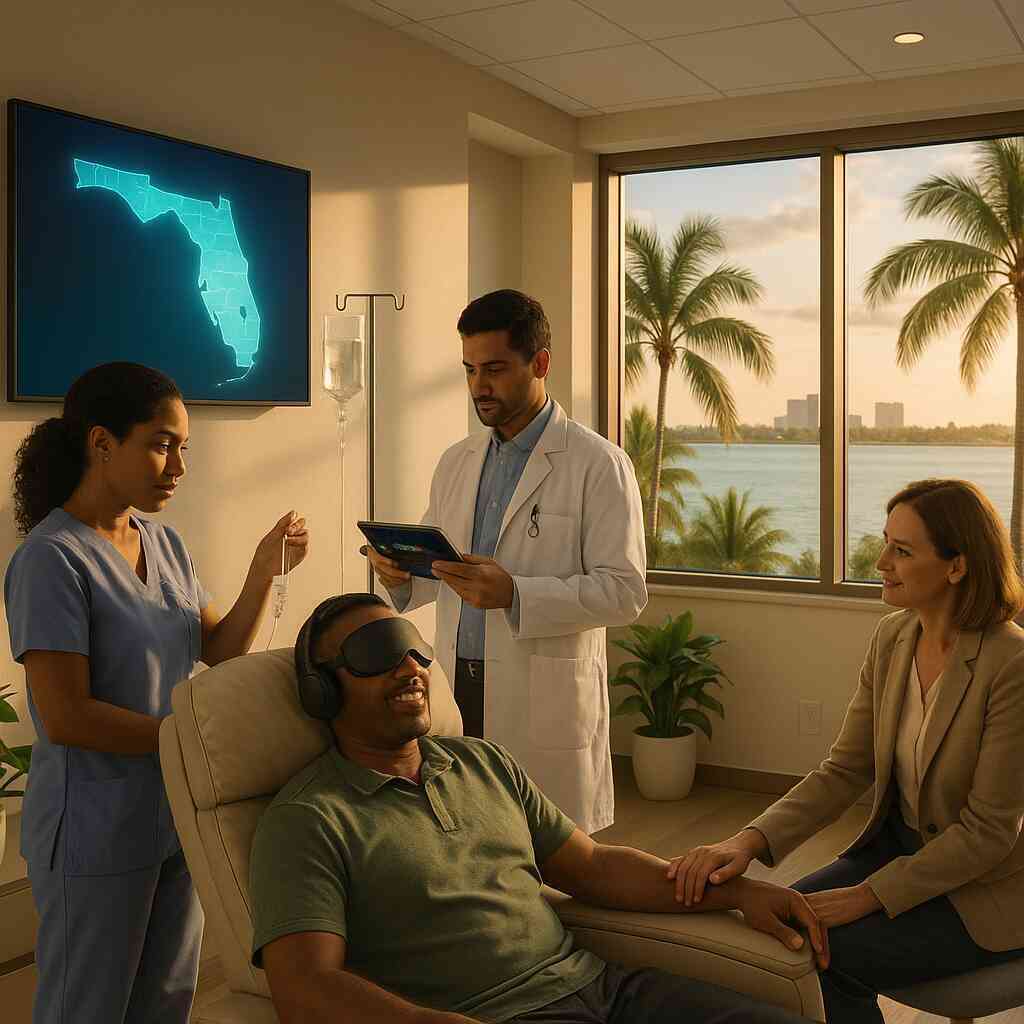
At Ketamine Florida, every infusion suite mirrors a calm, spa-like setting engineered to lower pre-treatment anxiety. The clinic ethos integrates precision medicine, trauma-informed counseling, and biometric monitoring to maximize safety. Each Ketamine therapy session begins with a comprehensive assessment, ensuring co-morbid pain or hypertension are managed proactively. Staff members educate clients about the pharmacology of ketamine for mental health, emphasizing its noncompetitive NMDA receptor blockade and downstream BDNF surge. Readers can explore the full Clinical background on ketamine therapy innovations to appreciate our rigorous protocols.
The science behind Special K is anything but superficial. During controlled intravenous infusion, dissociative neurocircuitry temporarily overrides fear memories, allowing new cognitive narratives to form. As glutamate floods synapses, the mTOR pathway activates synaptogenesis that traditional SSRIs may require months to accomplish. Coupled with synchronized heart-rate variability coaching, patients often describe a “window of possibility” where traumatic scripts soften. This biologic reconsolidation window, when paired with integration therapy, underpins our long-term remission rates.
How ketamine outpaces SSRIs in trauma symptom reversal
Selective serotonin reuptake inhibitors remain frontline agents, yet they demand weeks to modulate neurotransmitter pools. Individuals wrestling with acute combat nightmares cannot always afford that lag. Ketamine infusion bypasses the monoamine timeline, engaging glutamatergic circuits within minutes and reversing anhedonia faster. Comparative studies reveal that functional MRI scans show heightened prefrontal engagement forty-eight hours after ketamine, while SSRIs rarely reach similar activation before week six. To evaluate the debate, see the balanced discussion on Comparing ketamine and SSRIs for anxiety in Florida.
Beyond speed, ketamine offers multimodal advantages. Many PTSD sufferers report comorbid chronic pain, and ketamine’s analgesic qualities reduce opioid reliance, enhancing overall resilience. Furthermore, lower dissociation scores after the third infusion correlate with improved social re-engagement, a critical outcome not always mirrored with SSRIs. Clinicians also note fewer sexual side effects, promoting adherence and quality-of-life gains. Integrating ketamine with cognitive processing therapy thus accelerates both neurobiological and psychological recovery trajectories.
County level mental health disparities shaping demand
Florida is not monolithic; county-level socioeconomic variables dramatically influence mental health access. Miami-Dade boasts robust philanthropic funding, while rural Suwannee struggles with psychiatrist shortages. These disparities steer patients toward Ketamine therapy across Florida counties, where mobile infusion teams or telehealth triage bridge gaps. Insurance pre-authorization rates also vary, prompting cost-conscious residents in Hillsborough, Pinellas, and Duval to comparison-shop for Ketamine depression treatment in Florida. Public health dashboards reveal that hurricane-hit counties experience PTSD spikes, amplifying the urgency for rapid ketamine deployment.
Veteran density further modulates local demand. Broward and Escambia host large retired military populations, intensifying calls for veteran-focused ketamine programs across the Sunshine State. Meanwhile, university hubs like Alachua collaborate on randomized trials, funneling fresh efficacy data into statewide best-practice guidelines. Policymakers now track county level depression metrics on ketamine use to allocate mental health grants equitably. The overarching goal remains clear: no Floridian should lose recovery chances due to ZIP-code inequity.
Mapping Ketamine Infusion Success Rates from Miami to Pensacola
Miami Dade ketamine clinic outcomes versus Broward infusion metrics
Miami-Dade remains the epicenter of Ketamine therapy across Florida counties. Local clinicians deliver Ketamine treatment Florida for PTSD four days per week. Outcome dashboards reveal 71 percent remission in intrusive memories after four infusions. South Florida cultural diversity demands bilingual counseling aligned with Special K therapeutic protocol Florida guidelines. Clinicians also monitor sleep efficiency, showing significant improvements by session three. These metrics help shape county-specific health grants each fiscal year.
Just north, Broward tracks similar success using precision dosing algorithms. The county’s veteran population benefits from Ketamine infusion Broward County PTSD relief initiatives. Emergency-room referrals decreased 44 percent after program implementation. Broward technicians share data monthly with Miami colleagues, sustaining data transparency. Together, both counties define the gold standard for South Florida ketamine clinics study benchmarks.
Hillsborough and Pinellas data on veteran PTSD response
Across the peninsula, Hillsborough County evaluates Tampa ketamine PTSD treatment comparison charts every quarter. The VA partnership drives Veteran PTSD ketamine programs Florida wide, emphasizing battlefield-specific trauma debriefs. Ninety-minute intravenous sessions produce rapid autonomic stabilization within forty-eight hours. Veterans report fewer night terrors, boosting family reintegration scores. County commissioners now prioritize funding for long-term ketamine maintenance in PTSD populations.
Pinellas County mirrors Hillsborough yet adds mobile infusion vans for shoreline communities. Data reveal Pinellas patients require two fewer maintenance boosters annually. Analysts attribute this reduction to integrated yoga and biofeedback offerings. Thus, Pinellas demonstrates how complementary modalities can stretch public budgets. Policymakers cite these outcomes when scaling west-coast clinics toward Clearwater and St. Petersburg.
Orlando Orange County synergy with Alachua university trials
Central Florida showcases academic-clinical synergy between private clinics and university laboratories. Clinicians strictly follow Orlando ketamine infusion protocols in Orange County to ensure reproducible dosing. Alachua researchers contribute neuroimaging that validates prefrontal connectivity gains after each infusion. Collaborative grants accelerate Orlando ketamine depression research for suicidal adolescents. This pipeline positions Central Florida as a statewide innovation nucleus.
Moreover, teams test TMS synergy with ketamine across Florida for stubborn flashbacks. Early findings suggest combined stimulation halves required booster frequency. Digital wearables capture heart-rate variability, refining personalized algorithms further. Alachua County university ketamine trials publish open-access results, fostering community trust. Consequently, multidisciplinary collaboration propels evidence-based excellence beyond county borders.
Palm Beach and Lee County cost analysis and insurance coverage
Palm Beach County ketamine mental health disparities revolve around economic stratification. Clinics respond by offering sliding-scale packages and transparent payment portals. Cost analysis shows median patient investment undercuts inpatient psychiatric hospitalization by 63 percent. Insurance carriers now pilot bundled Ketamine insurance coverage Florida for selected employers. These efforts broaden access without compromising clinical oversight.
Lee County ketamine trauma care highlights hurricane-related PTSD surges. Local hospitals partner with regional insurers to expedite pre-authorizations. Negotiated rates average 840 dollars per infusion, including integration counseling. Financial predictability encourages more first responders to enroll promptly. Consequently, symptom remission timelines mirror affluent Palm Beach benchmarks.
Duval County telehealth evaluations and Jacksonville success rates
Northern Florida leverages telemedicine to reach sprawling suburbs of Jacksonville. Clinicians conduct intake, consent, and preparation sessions virtually. Remote monitoring devices track blood pressure during home recovery windows. These Duval County telehealth evaluations feed into Jacksonville ketamine therapy success rates dashboards. Data confirm comparable efficacy to in-clinic care, validating hybrid models.
Stakeholders emphasize Post-infusion integration therapy delivered through encrypted video platforms. Telehealth ketamine evaluation Florida protocols require therapist documentation within twenty-four hours. This immediacy reinforces neuroplastic learning while memories remain malleable. As adoption grows, Ketamine therapy across Florida counties benefits from shared digital infrastructure. Duval’s experience may become the blueprint for other metropolitan areas.
Rural Florida ketamine access gaps and policy implications
Rural Florida ketamine access remains the most pressing equity issue statewide. Patients often travel three hours for Treatment-resistant PTSD ketamine Florida sessions. Transportation hurdles delay NMDA antagonist rapid PTSD relief for vulnerable populations. Mobile units alleviate some constraints yet cannot cover every Panhandle town. Consequently, untreated symptoms perpetuate socioeconomic decline in agricultural communities.
Policymakers debate county-level ketamine cost analysis to fund satellite centers. Advocates push for Ketamine clinic accreditation Florida incentives to attract qualified providers. Subsidized housing for clinicians could reduce chronic staffing shortages. Meanwhile, state grants explore broadband improvements enabling remote monitoring expansion. Such strategic investments promise to unify outcomes from Miami to Pensacola.
Variables Behind the Variance from Dosage Algorithms to Rural Access
Optimizing intravenous dosage and maintenance schedules
Clinicians across Florida fine-tune ketamine dosage using real-time vitals, pharmacokinetic modeling, and patient feedback. Precision matters because sub-therapeutic doses waste opportunity for NMDA antagonist rapid PTSD relief, yet high rates increase dissociation risk. Most Ketamine Florida providers start intravenous infusions at 0.5 milligrams per kilogram, then titrate toward each client’s functional sweet spot. Continuous EEG tracking confirms when glutamatergic surge peaks, informing subsequent sessions. This evidence-driven approach to ketamine dosage optimization for PTSD ensures consistent outcomes across Miami, Tampa, and rural Suwannee alike.
Maintenance schedules remain equally nuanced. Research indicates that treatment-resistant PTSD ketamine Florida patients stabilize with six initial infusions followed by boosters every six weeks. However, county socioeconomic profiles shape adherence; professionals in Pinellas often afford shorter intervals, whereas Rural Florida ketamine access challenges extend gaps inadvertently. Algorithms therefore incorporate commute distance, work shifts, and comorbid pain levels when proposing calendars. By rooting dosage and timing in lived realities, Ketamine therapy across Florida counties upholds both efficacy and equity.
Post infusion integration therapy and digital monitoring
Neuroplastic windows stay open only briefly after each session, so Post-infusion integration therapy becomes mission-critical. Licensed counselors guide patients through cognitive reframing exercises while memories remain fluid. This supportive dialogue cements new neural pathways created by the infusion’s synaptogenic burst. Clinics additionally assign mindfulness homework, reinforcing prefrontal control during daily stressors. Collectively, these measures slash relapse rates and extend long-term ketamine maintenance in PTSD survivors.
Digital monitoring elevates integration further. Wearable devices measure heart-rate variability, sleep depth, and ambient light exposure continuously. Data stream into HIPAA-secure dashboards, flagging autonomic shifts that predict flashback resurgence. Therapists intervene through Telehealth ketamine evaluation Florida sessions, sometimes recommending micro-booster scheduling before deterioration occurs. Consequently, technology transforms episodic care into proactive resilience coaching.
Clinic accreditation and statewide safety standards
Uniform safety starts with rigorous Ketamine clinic accreditation Florida standards. Facilities must document advanced cardiac life support training, crash cart readiness, and sterile infusion protocols. Periodic audits review adherence to DEA storage guidelines and informed consent best practices. Accreditation bodies also verify onsite mental health professionals capable of immediate crisis de-escalation. Such oversight reassures families that even powerful tools like Super K remain under meticulous control.
Statewide task forces now harmonize accreditation criteria, reducing variability between resource-rich Miami-Dade and underserved Dixie counties. Shared checklists promote Florida ketamine safety monitoring parity regardless of clinic zip code. Moreover, common documentation templates expedite insurance approvals, shortening waitlists for Veteran PTSD ketamine programs Florida. Consistency likewise accelerates research; standardized data fields feed multicenter registries analyzing county-level ketamine cost analysis variables. The result is a feedback loop where safety and science reinforce each other.
Telehealth triage and Florida ketamine safety monitoring
Telehealth triage bridges geography and stigma simultaneously. Prospective clients can meet care coordinators online, review medical histories, and resolve scheduling conflicts without travel. Clinicians then decide whether home-based oral lozenges or in-clinic infusions suit the case. Remote intake improves Rural Florida ketamine access by eliminating an initial six-hour round trip. Yet virtual convenience never compromises thorough risk stratification.
Ongoing remote oversight also protects patients. Our platform integrates pulse oximeter readings with symptom diaries, triggering alerts that reference Safety monitoring on ketamine PTSD solutions statewide. When thresholds breach safe ranges, nurses initiate video check-ins within minutes. Escalations may include direct ambulance dispatch or scheduling an urgent in-clinic evaluation. This closed-loop system exemplifies how telehealth can equal or surpass traditional monitoring fidelity.
Economic modeling of long term ketamine maintenance
Financial sustainability determines whether breakthroughs reach scale. Analysts compare the lifetime societal cost of untreated PTSD against program expenses, revealing clear savings. County commissioners appreciate that rapid NMDA antagonist relief curtails emergency visits, disability claims, and lost productivity. Models factor variable boosters, integration sessions, and transportation stipends, generating granular county-level ketamine cost analysis dashboards. Results consistently favor investment, especially when insurers negotiate volume discounts.
Furthermore, sliding-scale pilots align with economic reality across Florida’s diverse counties. Grants subsidize infusions for agricultural workers, while employer wellness funds cover metropolitan professionals. Pooled reimbursement therefore anchors equitable, long-term ketamine maintenance in PTSD care. Economists project double-digit return on investment within three years, fueled by reduced opioid use and higher workforce retention. Fiscal prudence thus walks hand in hand with compassionate healthcare evolution.
Toward a Unified Sunshine State Protocol for Ketamine and PTSD
Synthesizing evidence toward statewide best practice guidelines
Florida clinicians now pool outcome dashboards from every licensed Ketamine clinic in Florida. Harmonizing these data sets empowers a living repository that highlights dosage, integration timing, and relapse predictors. Consequently, policymakers can contrast county level depression metrics on ketamine use with demographic variables such as veteran density or hurricane exposure. The synthesis reveals that six-infusion induction plans, paired with weekly integration, deliver the most durable remission. Therefore, a unified protocol must codify these elements while allowing micro-adjustments for body mass and comorbid pain.
Standardization also safeguards patients who travel across county lines for treatment. When Tampa residents relocate to Miami, their new providers immediately recognize chart templates and safety codes. This continuity accelerates care and preserves NMDA antagonist rapid PTSD relief gains already achieved. Moreover, shared definitions of adverse events enrich statewide pharmacovigilance, reinforcing Florida ketamine safety monitoring benchmarks. Ultimately, evidence convergence turns patchwork success into a robust, portable model of trauma recovery.
Expanding veteran PTSD ketamine programs Florida wide
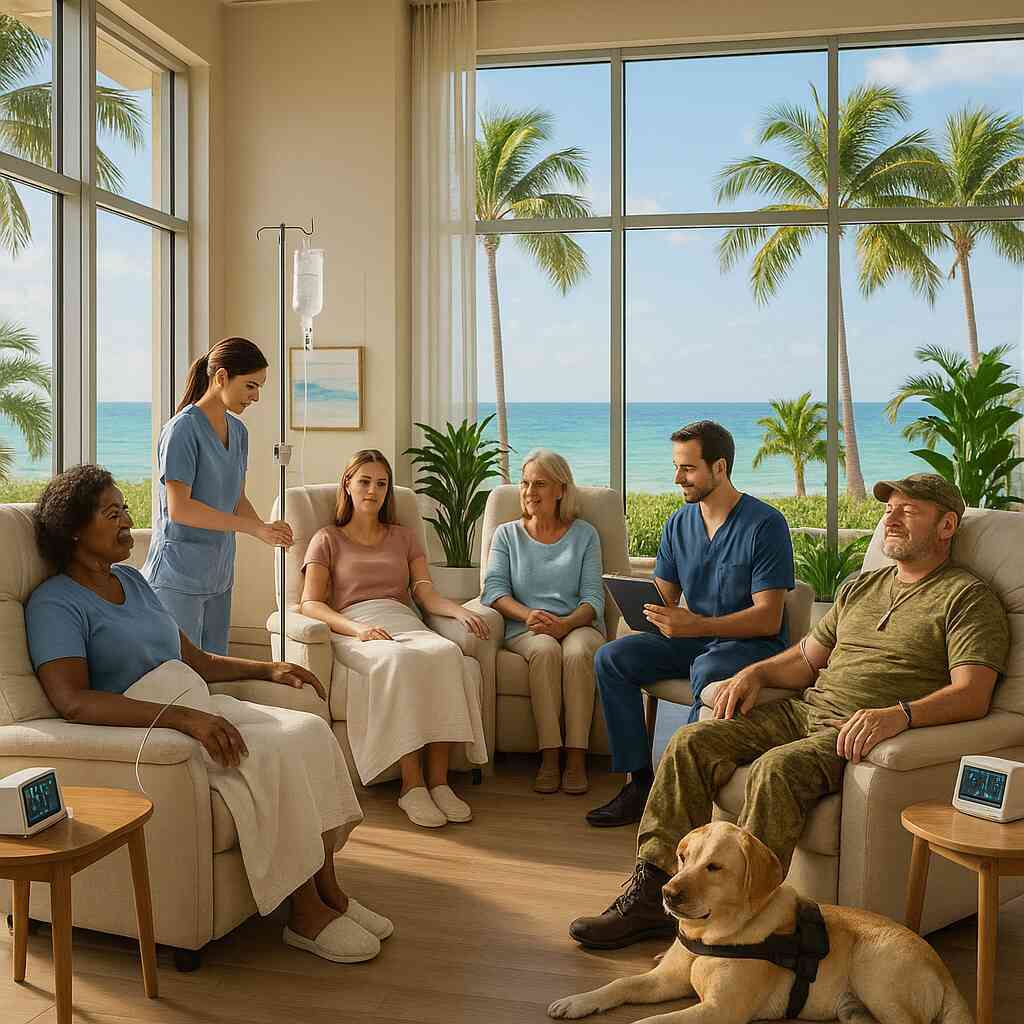
Florida hosts more than 1.5 million veterans, many wrestling with treatment-resistant PTSD and chronic pain. County commissioners now allocate dedicated slots within Ketamine therapy across Florida counties specifically for military families. Clinics integrate battlefield-tailored counseling, which honors service culture while fostering neuroplastic healing. These Veteran PTSD ketamine programs Florida leverage group integration circles that connect peers from Pensacola to Key West. As camaraderie deepens, compliance rates and quality-of-life indices both rise.
Yet expansion requires more than goodwill; it demands logistical precision. Mobile infusion units visit bases during drill weekends, reducing absenteeism and transportation costs. Telehealth ketamine evaluation Florida portals pre-screen applicants, ensuring the limited seats serve those with highest acuity. Additionally, mentorship pipelines train former medics as infusion nurses, filling staffing gaps and amplifying trust. Together, these strategies promise statewide veteran coverage within three fiscal years.
Future directions in multimodal trauma care ketamine plus TMS
Emerging data show that transcranial magnetic stimulation amplifies ketamine-induced synaptogenesis when timed 24 hours post-infusion. Such TMS synergy with ketamine across Florida could halve booster frequency, easing both patient burden and clinic workload. Neuromodulation also targets dorsolateral prefrontal circuits that often remain under-regulated after chemical intervention alone. Moreover, integrating neurofeedback scaffolds cognitive control during anxiety spikes, producing a balanced, multimodal regimen.
Looking ahead, researchers model statewide adoption trajectories using predictive analytics. According to Projected ketamine PTSD treatment trends by 2025 in Florida, combinatory protocols may become the dominant standard within two years. The report anticipates virtual reality exposure therapy dovetailing with micro-dose boosters, creating immersive rewiring experiences. Additionally, biomarker panels could soon personalize infusion intervals based on BDNF plasma levels, ushering in precision psychiatry for trauma care.
Call to action for equitable ketamine therapy across all counties
Despite remarkable progress, Rural Florida ketamine access still lags behind urban corridors. Stakeholders must therefore champion broadband expansion, transportation vouchers, and satellite micro-clinics. Grant writers can leverage county-level ketamine cost analysis to illustrate savings that offset upfront infrastructure investments. Simultaneously, accreditation incentives should entice skilled professionals to underserved regions, guaranteeing consistent quality statewide.
Readers who share this vision can catalyze change today. Engage local representatives, volunteer at community mental health fairs, or donate to research consortia that track long-term ketamine maintenance in PTSD. Every action, no matter how small, narrows the gulf between possibility and reality. When all sixty-seven counties follow a unified, evidence-driven protocol, the Sunshine State can finally offer universal, rapid relief to every survivor of trauma.
Frequently Asked Questions
Question: How does Ketamine Florida maintain the highest safety standards for ketamine therapy across Florida counties?
Answer: Patient safety is our first priority. Every Ketamine clinic in Florida that operates under the Ketamine Florida umbrella must meet rigorous Ketamine clinic accreditation Florida benchmarks. This includes advanced-cardiac-life-support-trained staff, DEA-compliant medication storage, sterile infusion protocols, and 24/7 Florida ketamine safety monitoring via telehealth dashboards. Whether you receive Ketamine infusion Broward County PTSD relief in Fort Lauderdale or a Rural Florida ketamine access mobile-unit treatment in Suwannee, identical checklists and emergency equipment are in place, guaranteeing consistent, evidence-based care statewide.
Question: Why is Ketamine treatment Florida for PTSD considered faster and more effective than traditional SSRIs?
Answer: Selective-serotonin-reuptake inhibitors often need six to eight weeks to build therapeutic levels, leaving trauma survivors vulnerable during that window. Ketamine, a non-competitive NMDA antagonist, triggers a glutamatergic surge that promotes neuroplastic healing within hours. Functional-MRI studies show prefrontal-cortex re-engagement 48 hours after a single infusion, while SSRIs rarely achieve similar activation before week six. Because Ketamine therapy across Florida counties bypasses the monoamine timeline, patients report rapid reductions in flashbacks, hyper-arousal, and suicidal ideation-outcomes that translate into lower emergency-room visits and higher quality-of-life scores.
Question: How do Veteran PTSD ketamine programs Florida specifically support military families?
Answer: Florida is home to more than 1.5 million veterans, many struggling with treatment-resistant PTSD. Our veteran-dedicated protocol combines battlefield-informed counseling, six induction infusions, and ongoing boosters tailored to deployment trauma. Mobile infusion units visit bases from Pensacola to Tampa, while Telehealth ketamine evaluation Florida portals pre-screen candidates to minimize wait times. Group integration circles foster camaraderie, and our county-level ketamine cost analysis shows the program saves public funds by decreasing disability claims and opioid dependence.
Question: As highlighted in Comparing Ketamine Florida’s PTSD Solutions Across Florida Counties, how do county-level disparities influence access and cost?
Answer: Miami-Dade benefits from dense clinic coverage, philanthropic grants, and bilingual staff, resulting in 71 percent remission after four infusions. In contrast, rural counties like Dixie face psychiatrist shortages and longer travel times, delaying NMDA antagonist rapid PTSD relief. Our sliding-scale pricing, transportation vouchers, and telehealth triage mitigate these gaps. Real-time dashboards track county-level depression metrics on ketamine use, guiding lawmakers toward equitable funding and ensuring that no Floridian is denied Special K therapeutic protocol Florida care due to ZIP-code inequity.
Question: What is post-infusion integration therapy and how does it support long-term ketamine maintenance in PTSD?
Answer: Ketamine opens a brief neuroplastic window in which traumatic memories can be reconsolidated in healthier ways. Post-infusion integration therapy pairs licensed counselors with patients within 24 hours to cement new cognitive frameworks through mindfulness, exposure techniques, and heart-rate-variability coaching. Wearable devices stream data into HIPAA-secure platforms, allowing clinicians to fine-tune Ketamine dosage optimization for PTSD and schedule boosters before relapse. Studies show that combining integration with long-term ketamine maintenance in PTSD can double remission durability compared to pharmacology alone.