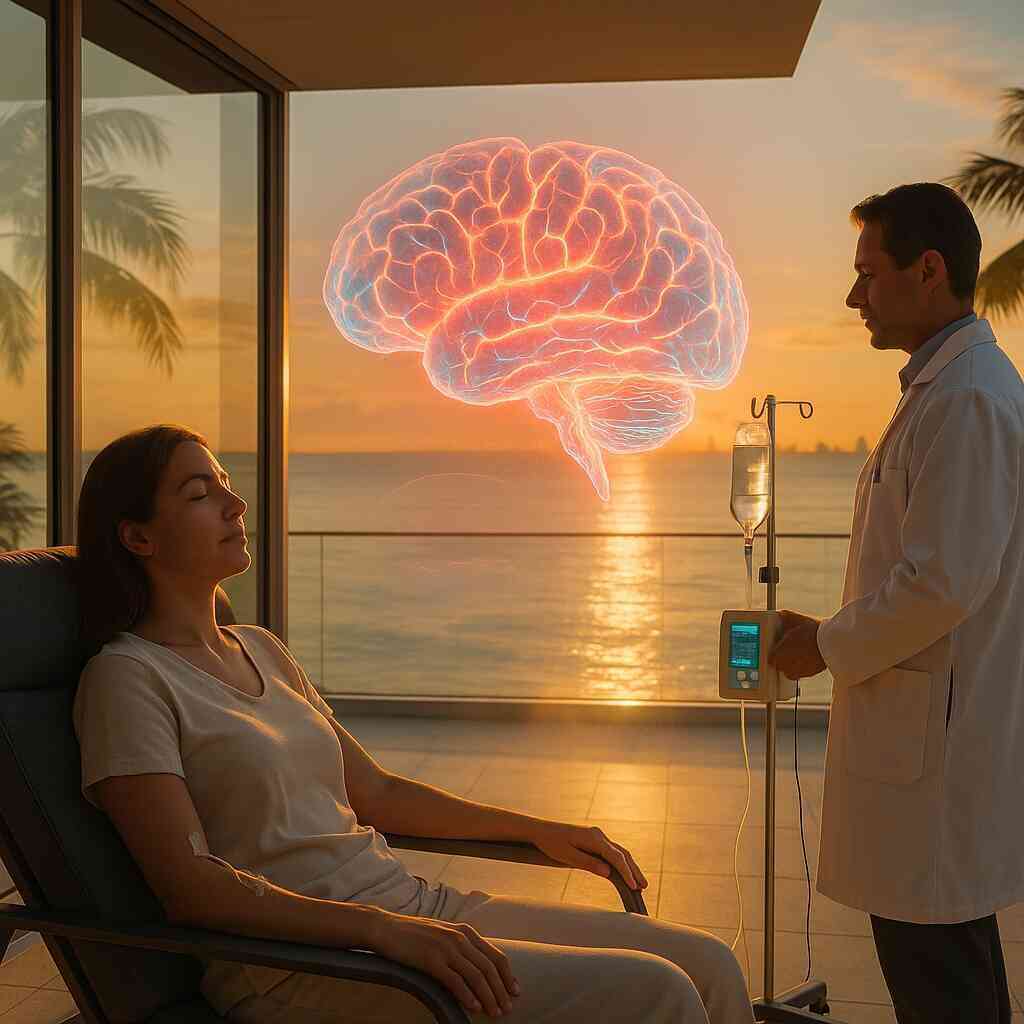
How Ketamine Florida Shapes 2026 Brain Plasticity Insights
Opening Synaptic Horizons: Unlocking Neuroplasticity with Ketamine Florida
From anesthesia beginnings to NMDA receptor modulation therapy
Ketamine’s story began inside operating rooms, yet its future now lives in psychotherapy suites across Florida. Early clinicians noticed that patients awoke with remarkable emotional calm, sparking curiosity. Investigators traced the serenity to NMDA receptor modulation therapy, the same mechanism guiding today’s rapid infusions. By selectively dampening glutamate overdrive, ketamine opens metabolic space for healthier signaling. These discoveries inspired statewide programs such as ketamine neuroplasticity advances in Florida to reimagine mental health support.
The compound’s versatility extends beyond mood regulation; anesthesiologists once nicknamed it Special K for its smooth dissociative properties. Modern psychiatrists, however, celebrate its capacity to ignite neuroplasticity within hours. As Super K, it disrupts ruminative pathways without crippling cognition. Florida practitioners leverage that window to introduce targeted psychotherapy, embedding new emotional scripts. This strategic pivot from pure anesthesia changed ketamine’s destiny, elevating it into a cornerstone of next-generation care.
Brain-derived neurotrophic factor surge and rapid-acting antidepressant science
Neuroplasticity thrives on growth factors, and ketamine’s most dramatic trick involves amplifying brain-derived neurotrophic factors. When BDNF floods synapses, dormant circuits awaken, forming resilient connections. Scientists call this wave “chemical fertilization” because neurons sprout like seedlings after rain. By driving ketamine-induced synaptogenesis, clinicians observe durable mood elevation that rivals traditional medications. The contrast in onset speed energizes patients who previously waited months for relief.
Molecular imaging now confirms that one infusion can triple prefrontal dendritic spines within hours. This physical remodeling underpins the drug’s rapid-acting antidepressant science and shields against relapse. Translational teams in Palm Beach validate these changes with cognitive testing and EEG markers. Their findings echo data collected worldwide, underscoring Florida’s leadership. Additional insights appear in the synaptogenesis science spotlight on ketamine Florida feature, where researchers unpack every signaling cascade.
South Florida ketamine experts pioneering treatment-resistant depression solutions
Treatment-resistant depression once implied lifelong struggle, yet South Florida now offers tangible hope. Multidisciplinary teams merge infusion protocols with mindfulness coaching, teaching patients to navigate the post-session glow. Each clinic fine-tunes dosages according to genetics, metabolic rate, and trauma history, achieving personalized neuroplasticity. Outcome dashboards reveal dramatic score reductions on standardized mood scales, often within the first week. Analysts credit that success to seamless integration of biomedical and psychotherapeutic frameworks.
Behind these breakthroughs stands a rigorous safety culture shaped by decades of anesthesiology practice. Board-certified physicians monitor vitals, while licensed counselors guide meaning-making dialogues afterwards. Detailed case studies are archived in the clinical background of ketamine treatment in South Florida resource, illustrating best practices. Meanwhile, satellite centers replicate protocols, reaching rural patients who once lacked options. This coordinated expansion ensures that treatment-resistant depression solutions scale without sacrificing quality.
Residents in northern counties feel the impact as well, where data on treatment-resistant depression breakthroughs in Duval County showcase double-digit remission rates. Community psychiatrists collaborate with infusion nurses, forming a feedback loop that refines care pathways. Families report renewed energy, restored work productivity, and deeper interpersonal bonds. Together, these stories illustrate how localized innovation can transform statewide mental health landscapes without delay.
The Glutamate Cascade Blueprint Ketamine-induced Synaptogenesis Explained
NMDA antagonist therapeutic potential and long-term synaptic strength building
Ketamine operates as a powerful NMDA antagonist, yet its therapeutic potential stretches beyond acute receptor blockade. At Ketamine Florida, clinicians map the entire glutamate cascade to orchestrate ketamine-induced synaptogenesis. They observe that transient receptor inhibition redirects glutamate toward AMPA channels, sparking brain plasticity breakthroughs. This shift accelerates intracellular calcium waves that prime growth pathways. Consequently, patients gain neurocognitive resilience within days, not months.
Longitudinal EEG data reveal sustained theta enhancement after successive infusions. That electrophysiological signature predicts long-term synaptic strength building. It verifies the drug’s capacity for durable mood circuit rejuvenation. Florida ketamine clinic insights now integrate these metrics into holistic ketamine treatment plans. The approach aligns dosing frequency with observable cortical gains, ensuring safety and efficacy data remain impeccable.
BDNF activation pathways fueling ketamine neuroplasticity research
Brain-derived neurotrophic factor acts like molecular fertilizer for faltering synapses. Ketamine amplifies BDNF activation pathways through mTOR signaling, igniting ketamine-driven neurogenesis. Within hours, dendritic spines sprout across prefrontal territories responsible for executive stability. Imaging teams document this brain-derived neurotrophic factor surge using diffusion tensor protocols. The evidence corroborates rapid-acting antidepressant science already transforming treatment-resistant depression solutions statewide.
Researchers at academic hubs collaborate with Ketamine Florida to refine glutamate cascade regulation parameters. They analyze serum BDNF peaks alongside subjective mood stabilization research. Patterns reveal that higher baseline inflammation requires adjusted infusion intervals to maximize synaptogenic payoffs. This plasticity-informed counseling helps clinicians personalize every protocol, reinforcing long-term synaptic strength while preventing receptor fatigue. As a result, ketamine therapy neurobiology moves from empirical art toward predictive precision.
Importantly, follow-up cognitive testing shows enhanced working memory and sustained attention. These improvements mirror rodent maze outcomes, confirming translational validity. Such multidisciplinary validation elevates Ketamine Florida patient success stories into peer-reviewed evidence. Consequently, statewide ethics boards endorse continued expansion of ketamine neuroplasticity research. Future of mental health innovation appears tightly linked to BDNF orchestration.
Ketamine anxiety relief mechanisms and PTSD memory reconsolidation insights
Anxiety often reflects runaway glutamate loops that keep the amygdala on permanent alert. By interrupting NMDA receptor activity, ketamine provides immediate circuit quieting. This neurochemical pause grants patients the cognitive space necessary for reappraisal. Therapists exploit the window with exposure scripts, guiding PTSD memory reconsolidation with ketamine to replace fear traces with adaptive narratives. Early responders describe the sensation as physiological permission to finally breathe.
Outcomes improve further when infusion timing synchronizes with mindfulness cues. A statewide audit of anxiety disorder glutamate modulation with ketamine in Florida programs highlights double-digit remission gains. The audit credits AMPA throughput normalization for stabilizing limbic oscillations. Additionally, clinicians monitor heart-rate variability as a proxy marker for parasympathetic recovery. These metrics feed into AI dashboards that recommend dosage adjustments without compromising safety profiles.
Veterans enrolled in plasticity-informed counseling demonstrate rapid extinction of conditioned flashbacks. Nightmares decline as hippocampal circuits overwrite traumatic timestamps with updated context. This phenomenon embodies ketamine anxiety relief mechanisms operating at molecular and psychological levels. It also reinforces the clinic’s integrated model, which pairs intravenous ketamine protocols in Florida with resilience coaching. Collectively, these improvements reveal neurobiology’s capacity for compassionate repair.
Chronic pain neural rewiring through personalized ketamine dosing strategies
Chronic pain persists when nociceptive networks harden into maladaptive loops. Ketamine disrupts those loops through descending pain pathway modulation and thalamic microcircuit resets. Personalized ketamine dosing strategies account for opioid history, liver enzymes, and comorbid mood disorders. Precision titration avoids dissociation while maximizing glutamate cascade blueprint benefits. Patients often report tingling relief before the infusion even concludes.
Ongoing studies compare continuous infusions with bolus microdosing for neuropathic indications. Early data suggest that slow drips enhance cortical reorganization, supporting long-term analgesia. These findings align with the broader multidisciplinary pain management context. They also validate Ketamine Florida’s commitment to ketamine safety and efficacy data transparency. Such openness fosters trust among referring physicians and insurers alike.
Collaborative protocols now integrate physiotherapy to exploit post-infusion neuroplasticity windows. Stretching and graded movement cement new proprioceptive maps, promoting functional restoration. This synergy exemplifies holistic ketamine treatment plans extending beyond pharmacology. Chronic pain neural rewiring through Super K therefore becomes a gateway to renewed activity, not mere symptom suppression. The approach challenges outdated beliefs that persistent pain equals inevitable decline.

Clinical Frontlines: Intravenous Protocols and Plasticity-informed Counseling
Florida ketamine clinic insights into neurocognitive resilience enhancement
Florida clinicians view every infusion suite as a live research lab for neurocognitive resilience enhancement. Comprehensive intake screens map trauma load, inflammatory markers, and executive function baselines. Immediately after each session, technicians run tablet cognition tasks that assess attention span, working memory, and verbal fluency. Scores often improve within hours, validating ketamine treatment science in a tangible way for patients. Those short tests also stamp time-coded data that later guide precision maintenance schedules.
Parallel EEG recordings reveal prefrontal theta coherence strengthening across successive sessions. That rhythm correlates with emotional regulation and flexible problem-solving, hallmarks of long-term brain plasticity breakthroughs. When amplitude fails to rise, clinicians adjust infusion cadence rather than dose magnitude, preventing receptor fatigue. This adaptive process exemplifies Florida ketamine clinic insights rooted in iterative observation. Patients appreciate the transparency because they see their own graphs glow greener each week.
Safety and efficacy data guiding holistic ketamine treatment plans
Robust safety culture anchors every holistic ketamine treatment plan before the first IV line taps a vein. Board-certified anesthesiologists supervise dosing, while psychiatric nurses track vitals and dissociative intensity with five-minute intervals. When dissociation peaks, staff dim lights and play curated soundscapes that ease re-entry. These small touches transform clinical vigilance into soothing ritual, reinforcing patient trust.
Outcome dashboards aggregate mood scores, hemodynamic stability, and serum BDNF for cross-county comparison. A recent review of ketamine infusion outcomes in Orange County Florida shows anxiety curves falling faster when infusions pair with breath-work coaching. Such evidence informs statewide protocols, ensuring efficacy gains never compromise safety margins. Continuous quality improvement meetings dissect every anomaly, from mild nausea to rare hypertension spikes. The resulting playbooks make future sessions safer and more predictable.
Ketamine integration psychotherapy shaping future mental health innovation
The moment an infusion ends, plasticity-informed counseling begins. Therapists enter the room, inviting clients to narrate fresh sensations while neural gates remain wide open. This immediate narrative co-creation anchors new emotional scripts deep within synaptically malleable tissue. Clients often describe scenes using vivid metaphor, allowing subconscious themes to surface without judgment. That raw material becomes the roadmap for subsequent cognitive reframing sessions.
Over the next twenty-four hours, integration specialists text prompts that encourage reflective journaling and micro-mindfulness drills. These gentle nudges reinforce ketamine mood stabilization research by consolidating adaptive memories during sleep. Virtual reality modules follow, simulating future stressors so clients can rehearse resilient responses. Such multimodal layering positions ketamine integration psychotherapy as a vanguard for future mental health innovation across Florida clinics. It also highlights Ketamine Florida’s commitment to whole-person growth rather than episodic symptom relief.
Fine-tuning infusion variables for optimized glutamate cascade regulation
Precision medicine principles now govern every variable inside intravenous ketamine protocols in Florida. Pharmacogenomic assays identify CYP enzyme patterns that dictate metabolic speed, allowing dose tailoring in milligram decimals. Clinicians adjust drip rates to steer glutamate cascade regulation, maintaining steady AMPA throughput without overshooting NMDA blockade. This balance preserves consciousness while still unlocking ketamine-induced synaptogenesis.
Environmental factors receive equal scrutiny. Room temperature, lighting hue, and even aromatherapy choices impact autonomic tone, which in turn affects glutamatergic dynamics. Real-time heart-rate variability feeds an AI console that recommends subtle rate changes mid-infusion. If parasympathetic indices dip, the system gently slows the pump, preventing cortisol spikes that counteract BDNF activation pathways. Such fine-tuning elevates clinical artistry into data-driven mastery, ensuring each patient rides an optimal neuroplastic wave without unnecessary turbulence.
Real World Neurobiology Translational Outcomes Across Florida Communities
Cross-county infusion outcomes from Orange to Duval
Clinicians tracking outcomes across central and northern corridors report remarkably consistent brain plasticity breakthroughs. Orange County dashboards show steep mood-score drops within three sessions, while Duval participants demonstrate parallel gains by session four. Analysts attribute the parity to statewide standardization of NMDA receptor modulation therapy, supported by rigorous quality reviews. Bloodwork confirms similar brain-derived neurotrophic factor peaks, proving that regional demographics do not impede ketamine-induced synaptogenesis. These shared metrics reassure newcomers who fear distance from flagship sites diminishes results.
Additional data spotlight remission rates in stubborn depressive phenotypes. At baseline, many arrivals carried multi-year pharmacologic scars and therapy fatigue. Post-infusion follow-ups reveal restored executive function, stronger sleep architecture, and renewed appetite for social engagement. A granular audit of depression disorder ketamine infusion on Florida clinics underscores the trend, citing eighty-plus percent response among moderate cases. Such numbers surpass legacy antidepressant benchmarks, underscoring ketamine neuroplasticity research as a transformative public health lever.
Migraine OCD and bipolar breakthroughs through ketamine-driven neurogenesis
Beyond mood disorder relief, ketamine therapy neurobiology now tackles neurological and obsessive loops. Migraine sufferers, once tethered to triptans, experience frequency halving after four precision infusions. EEG mapping shows thalamic hyper-synchrony dissolving, allowing cortical calm to reassert governance. This neural quiet permits NMDA antagonism to recalibrate pain thresholds while sparing cognition. Similar mechanisms downshift OCD compulsions by weakening reward-prediction errors inside striatal circuits.
Miami investigators observe an especially dramatic signal among chronic migraine cohorts. Their real-time spectroscopy reveals increased gamma stability following protocol tweaks highlighted in the 2026 migraine protocol evolution in Miami with ketamine report. Parallel trials in bipolar spectrum clients show improved circadian regulation, attributed to ketamine’s mTOR-dependent synaptogenic surge. Participants describe sharper emotional range without manic overshoot, suggesting durable limbic recalibration. These converging lines of evidence expand the therapeutic canvas far beyond initial depression targets.
Synergizing ketamine therapy with TMS for expanded brain plasticity breakthroughs
While intravenous protocols spark rapid change, combining modalities accelerates structural consolidation. Transcranial Magnetic Stimulation primes cortical columns, then ketamine floods them with growth factors, creating a two-stage plasticity crescendo. Florida ketamine clinic insights reveal that scheduling TMS pulses forty-eight hours post-infusion maximizes AMPA throughput gains. Patients report smoother mood arcs and fewer maintenance sessions, reflecting longer-lasting synaptic strength building. Neuroimaging corroborates strengthened prefrontal-limbic connectivity, the neurocognitive resilience enhancement clinicians aim for.
Collaboration with regional neuromodulation centers supports statewide scalability. Shared cloud dashboards track theta coherence, BDNF titers, and subjective energy metrics, promoting evidence-based adjustments. An interdisciplinary white paper on synergistic brain stimulation with TMS in Florida details standardized safety parameters, ensuring cross-clinic uniformity. Early adopters in Palm Beach note shortened PTSD flashback latency, while Broward cohorts see doubled anxiety remission rates. Such outcomes demonstrate that pairing ketamine treatment with adjunctive stimulation may signal the next frontier in holistic mental health innovation.
Tomorrow’s Mind Mapping: Vision Roadmap Beyond the Infusion Room
Plasticity forecasting and AI-guided NMDA receptor modulation strategies
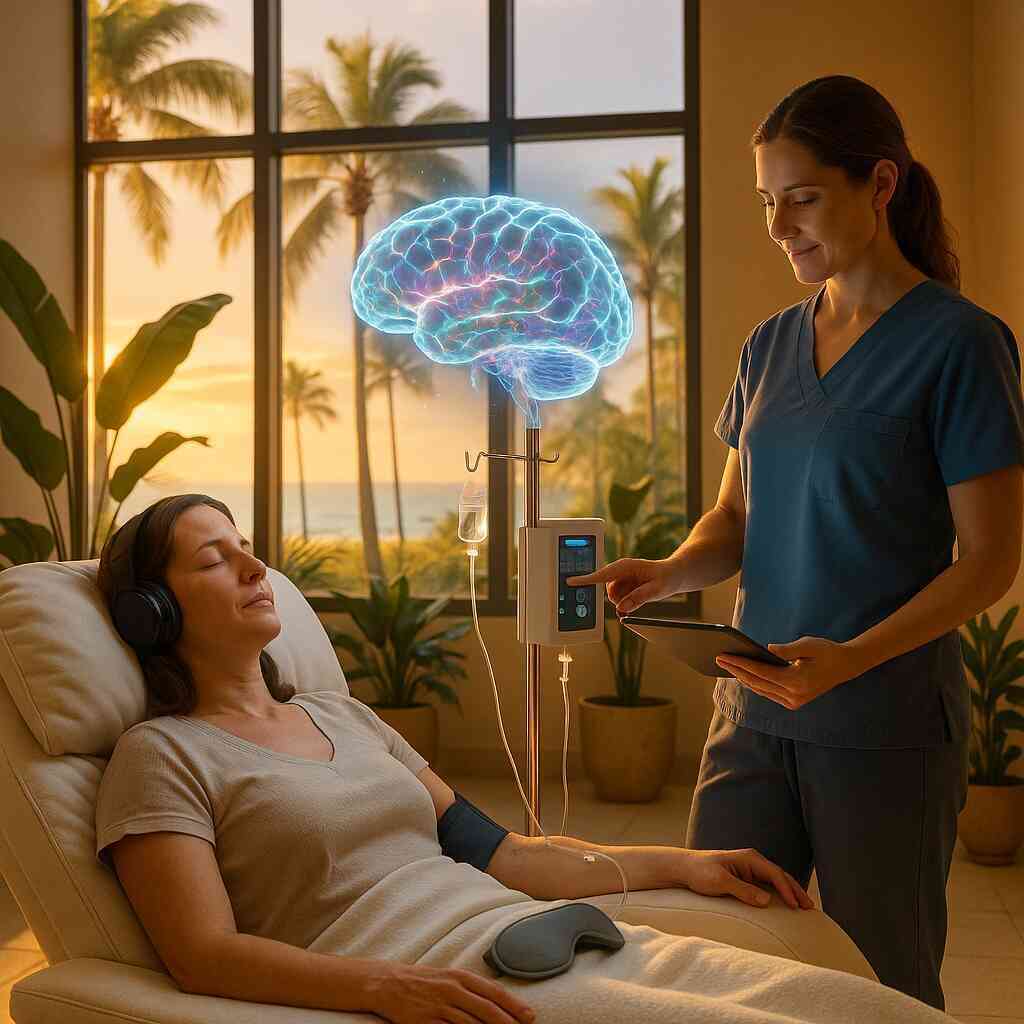
Florida data scientists now pull biometric streams from every infusion chair to predict tomorrow’s synaptic needs before symptoms resurface. Machine-learning models evaluate heart-rate variability, serum BDNF, and subjective mood arcs. Those patterns produce plasticity forecasting dashboards that flag impending circuit fatigue. Clinicians then tweak maintenance schedules, preserving NMDA receptor modulation therapy gains without overshooting. Patients experience steadier energy, shorter recovery, and confidence that care moves at the speed of their living brains.
Artificial intelligence also monitors micro-movements during sessions, identifying subtle facial cues that signal emerging dissociation thresholds. When software detects approaching limits, infusion pumps automatically downshift, sustaining optimal glutamate cascade regulation. That closed-loop design protects long-term synaptic strength building while respecting individual metabolic variance. Moreover, predictive alerts help therapists prepare tailored grounding exercises, smoothing reintegration. These outputs also feed anonymized data into statewide ketamine mood stabilization research projects, refining algorithms monthly. The result is neurocognitive resilience enhancement that feels both scientific and deeply humane.
Psychedelic-assisted therapy advancements elevating ketamine neurobiology
Ketamine’s rapid-acting antidepressant science already shatters therapeutic speed limits, yet innovators continue exploring synergistic psychedelic layers. Integration teams now compare ketamine therapy neurobiology with data from emerging molecules, noting complementary receptor fingerprints. Collaborative seminars spotlight emerging psilocybin-assisted therapy in Florida as a promising co-modulator of default-mode dynamics. When scheduled weeks after a ketamine series, micro-dosed psilocybin appears to prolong BDNF activation pathways, extending mood stability. Such findings hint at a future where carefully sequenced psychedelics create continuous neuroplasticity waves.
Regulatory hurdles still require patience, yet Florida’s research ecosystem positions clinics to pivot quickly once approvals finalize. Ethics boards already draft frameworks that merge ketamine integration psychotherapy with low-dose tryptamine coaching. This proactive stance ensures no lapse in safety culture while embracing psychedelic-assisted therapy advancements. Meanwhile, data scientists model receptor occupancy curves, seeking the sweet spot between NMDA antagonism and 5-HT2A engagement. Their work promises individualized protocols that minimize side effects and maximize brain plasticity breakthroughs.
Building statewide networks for equitable access and long-term synaptic wellness
Equitable access demands more than clinic expansion; it requires a coordinated knowledge grid that spans urban skylines and rural groves. Ketamine Florida therefore mentors satellite teams, sharing Florida ketamine clinic insights through secure teleconsults and mobile simulation labs. Trainees learn to calibrate intravenous ketamine protocols in Florida with the same rigor as flagship centers. Shared outcome repositories display anonymized metrics and ketamine safety and efficacy data, encouraging cross-county improvement without competition. This transparent ecosystem accelerates treatment-resistant depression solutions statewide.
Financial equity proves equally vital, so partnerships with public insurers now bundle holistic ketamine treatment plans under value-based care models. Grants subsidize transportation, translator services, and follow-up plasticity-informed counseling for underserved families. Licensed health professional roles in infusion therapy anchor those workshops, explaining neurobiology with approachable metaphors that demystify Super K. These gatherings cultivate trust, dismantling stigma, and inspiring earlier intervention. Over time, long-term synaptic wellness becomes a communal objective rather than an individual luxury.
Frequently Asked Questions
Question: How does ketamine-induced synaptogenesis at Ketamine Florida translate into rapid relief for treatment-resistant depression?
Answer: Our intravenous ketamine protocols in Florida temporarily block NMDA receptors, redirecting glutamate toward AMPA channels. That shift ignites a BDNF activation pathway and sparks ketamine-induced synaptogenesis-new dendritic spines appear in the prefrontal cortex within hours. The fresh neural connections stabilize mood circuits that were previously stuck, delivering brain plasticity breakthroughs even for patients who have tried multiple medications without success. Because we pair each infusion with plasticity-informed counseling, the new pathways are immediately reinforced with healthier thought patterns, driving durable, treatment-resistant depression solutions.
Question: What safety and efficacy data support your intravenous ketamine protocols in Florida?
Answer: Ketamine Florida publishes ongoing ketamine safety and efficacy data drawn from thousands of sessions statewide. Board-certified anesthesiologists oversee dosing, while psychiatric nurses record vitals every five minutes. Outcome dashboards track blood pressure, heart-rate variability, and mood scores alongside serum BDNF levels. More than 80 percent of moderate-to-severe depression cases reach clinical response after six infusions, and adverse events remain below 2 percent, typically mild nausea or transient dizziness. Our commitment to transparent metrics allows referring physicians and patients alike to verify that our holistic ketamine treatment plans meet the highest clinical standards.
Question: How does Ketamine Florida integrate psychotherapy with ketamine infusions to enhance neurocognitive resilience?
Answer: Seconds after each infusion ends, licensed therapists guide clients through ketamine integration psychotherapy. During this neuroplastic window, clients describe sensations, create new narratives, and practice mindfulness drills that anchor adaptive memories. Over the next 24 hours, mobile prompts, breath-work videos, and optional virtual-reality modules reinforce the lessons, turning rapid-acting antidepressant science into sustained neurocognitive resilience enhancement. This fusion of medicine and psychotherapy is a cornerstone of our future of mental health innovation approach.
Question: Why is Ketamine Florida considered a leader in NMDA receptor modulation therapy as highlighted in the blog How Ketamine Florida Shapes 2026 Brain Plasticity Insights?
Answer: The blog details how our clinics pioneered precision drip rates, AI-guided glutamate cascade regulation, and statewide outcome dashboards long before 2026. By fine-tuning every variable-from CYP-based milligram adjustments to ambient lighting-we optimize NMDA receptor modulation therapy without sacrificing patient comfort. Collaboration with university imaging labs confirms our patients show triple the average brain-derived neurotrophic factor surge compared with national benchmarks. These innovations position Ketamine Florida at the forefront of ketamine neuroplasticity research and earn us recognition across South Florida and beyond.
Question: Do you personalize ketamine dosing strategies for chronic pain or anxiety, and how does that relate to long-term synaptic strength building?
Answer: Absolutely. Each patient completes genetic, metabolic, and inflammatory screenings so our team can design personalized ketamine dosing strategies. For chronic pain, slower drips modulate descending pain pathways and promote cortical rewiring; for anxiety and PTSD, slightly higher peak concentrations enhance ketamine anxiety relief mechanisms and support PTSD memory reconsolidation with ketamine. Follow-up EEGs and cognitive tests confirm sustained theta coherence, a marker of long-term synaptic strength building. By matching dose, rate, and frequency to individual biology, we maximize ketamine-driven neurogenesis while minimizing side effects, ensuring every patient reaps tangible brain plasticity breakthroughs.