
If depression has drained your energy, comparing ketamine options can feel both urgent and confusing. You may be hoping for relief, but you do not want to guess wrong. That tension is real. We hear it from people every week at a ketamine clinic Florida residents trust for careful, personalized care. The good news is that ketamine therapy is not one-size-fits-all, and the route matters.
When ketamine feels like the answer but the route is still unclear
Why IV ketamine and oral ketamine are not interchangeable, even though they use the same medication
IV ketamine and oral ketamine contain the same core medicine, but they do not behave the same way in your body. IV ketamine goes directly into your bloodstream, so clinicians can control timing and dose more precisely. Oral ketamine must pass through digestion and liver metabolism, which changes how much active medicine actually reaches your system. That difference affects speed, intensity, and predictability. It also changes how you may feel during and after treatment.
Here is the part most people miss: the route is not a small detail. It shapes the entire treatment experience, from onset to monitoring needs to how long you stay in clinic. One client in the Orlando area described it as the difference between “a focused medical procedure” and “a slower, quieter medication day.” That is a fair comparison. It is also why comparing oral ketamine vs IV ketamine for treatment-resistant depression requires more than reading a brochure.
The patient question that matters most: whether you need rapid relief, easier access, or less clinic time
The best comparison starts with your real life. Are you looking for rapid relief from severe symptoms? Do you need a treatment that fits around work, childcare, or transportation limits? Or do you need a route that feels less clinic-intensive? Your answer matters more than a generic ranking. People often focus on “best,” but the better question is “best for what problem?”
If you are dealing with treatment-resistant depression, active suicidality, or a sharp functional decline, speed can matter a lot. If you are managing chronic anxiety or ongoing mood instability, convenience may matter more. If you live near Miami, Tampa, Jacksonville, or West Palm Beach, access may also influence your choice. We see this especially in patients balancing therapy, medication management, and demanding schedules. For many, the decision is practical before it is philosophical.
What Florida readers should weigh before comparing a ketamine clinic Florida option in Miami, Orlando, Tampa, or Jacksonville
Florida adds a few real-world considerations. You may be comparing a South Florida ketamine center against an Orlando or Tampa option, and travel time can shape adherence. Summer traffic, weather delays, and long bridge commutes are not abstract details. They affect whether treatment is realistic week after week. That is why location matters as much as modality.
You should also ask how the clinic handles safety ketamine monitoring, psychiatric evaluation, and follow-up. Some clinics focus only on the infusion chair. Others also support integration therapy, medication management, and aftercare planning. That difference matters for long-term stability. If you want to see how multiple Florida locations are organized, the areas we serve page can help you orient yourself before making calls.
The chemistry that changes the experience and why the delivery method matters
How ketamine as an NMDA receptor antagonist can affect neuroplasticity and mood recovery
Ketamine is a noncompetitive NMDA receptor antagonist, which sounds technical but has a simple implication: it changes how brain cells communicate. Researchers believe this can support neuroplasticity, the brain’s ability to form new connections and patterns. That is one reason ketamine treatment can help when older medications have stalled. It does not mean every person responds the same way. It does mean the science is more than hype.
Early depression research by Berman, followed by later work by Murrough, helped establish ketamine’s rapid antidepressant potential in carefully selected patients. Since then, clinicians have used it for mood disorders, pain syndromes, and complex cases that have not improved with standard care. On the ground, that often looks like someone who has tried multiple medications, felt discouraged, and wants a different mechanism. If you want a deeper look at mechanism and mood recovery, how ketamine explains neuroplasticity and mood is a useful companion read.
Why ketamine infusions often act faster than oral ketamine and why that matters for treatment-resistant depression, TRD, and suicidality
IV ketamine often works faster because it reaches the bloodstream immediately and bypasses much of the digestion process. Oral ketamine is absorbed more slowly, and the dose reaching the brain can be less predictable. For some people, that slower onset is acceptable. For others, especially those with TRD or urgent suicidal thinking, speed can be critical. Fast relief does not replace long-term care, but it can create breathing room.
A woman from near Fort Lauderdale once told us she had spent months “waiting for my meds to catch up.” That is a painful place to live. In cases like hers, quicker symptom change can mean you can sleep, eat, and think more clearly while a broader plan takes shape. Still, ketamine is not a guarantee, and it is not a substitute for emergency help if you are in immediate danger. If depression is the main concern, the ketamine therapy for depression disorder page gives a practical overview.
What dissociation feels like in guided sessions and why route of administration can change the intensity
Dissociation is one of the most discussed ketamine effects, and it can feel unfamiliar. People describe it as floating, a dreamlike distance, altered time, or a sense that sounds and thoughts are arriving differently. Some find it calming. Some find it strange. Most need reassurance that the experience is expected and time-limited in a monitored setting. Guided sessions matter because feeling safe changes how you move through the experience.
Route affects intensity. IV ketamine can produce a stronger, more immediate dissociative experience because the dose enters quickly and predictably. Oral ketamine may feel gentler or more diffuse, though that is not universal. The key is preparation and supervision. If you are anxious about this part, ask directly about guided sessions, ketamine therapy side effects, and how the clinic supports you before, during, and after treatment.
How oral ketamine and IV ketamine differ for anxiety, PTSD, OCD, bipolar depression, and chronic pain conditions like CRPS, fibromyalgia, and migraine
The route may influence which symptom pattern fits best. For anxiety, PTSD, OCD, bipolar depression, CRPS, fibromyalgia, and migraine, clinicians often weigh symptom severity, urgency, and tolerance for clinic time. IV ketamine may be preferred when symptoms are intense or when rapid adjustment is needed. Oral ketamine may be considered when access, convenience, or maintenance-style support is more important. That decision should follow a psychiatric evaluation, not internet guesswork.
For trauma-related symptoms, some patients benefit from pairing medication with therapy. That may include ketamine-assisted psychotherapy, integration therapy, or trauma-focused approaches like cognitive behavioral therapy or DBT. One client who had both PTSD and migraine told us the toughest part was not the treatment itself, but learning which symptom to track first. That is common. If you are comparing routes for trauma recovery, the ketamine treatment for PTSD page can help you think through the fit.
The practical tradeoffs most people only learn after they start comparing options
Oral ketamine vs IV ketamine in safety ketamine side effects and ketamine therapy side effects
Safety starts with honest expectations. Both routes can cause dizziness, nausea, blood pressure changes, confusion, and dissociation. Both require screening. Both deserve careful follow-up. The difference is that IV ketamine is usually administered with closer in-clinic observation, while oral ketamine may involve more variable exposure at home or between visits. That changes the risk discussion.
Some people assume oral means safer because it sounds gentler. That is not always true. If dosing is inconsistent, if monitoring is thin, or if another condition is present, risks can increase. Long-term effects of ketamine are still an active area of clinical caution, especially when use is repeated or unsupervised. Bladder irritation, sometimes called bladder cystitis ketamine, and urinary tract damage are concerns with misuse and heavy exposure. For a more detailed overview, see ketamine therapy side effects and safety guidance.
TopicIV ketamineOral ketamineMonitoringTypically in clinicMay involve less direct supervisionOnsetFasterSlowerPredictabilityMore preciseMore variableCommon useAcute or structured treatmentMaintenance or access-oriented careClinic timeLonger visitOften less clinic time### FDA-approved treatment and off-label ketamine, and where Spravato esketamine fits into the picture
This part confuses many people, and that is understandable. Traditional ketamine use for depression is generally off-label ketamine. In contrast, Spravato esketamine is an FDA-approved treatment for certain depression cases, including treatment-resistant depression and depressive symptoms in people with acute suicidal ideation or behavior, under specific conditions. The FDA also gave esketamine breakthrough therapy designation in the past, which helped accelerate its development. That does not make it right for everyone, but it does make it a different category.
Spravato is not the same as IV ketamine, even though both act on similar pathways. It has its own dosing, REMS-related monitoring requirements, and insurance dynamics. If coverage matters, this distinction is huge. A patient in Tampa recently told us she spent more time reading insurance fine print than researching her actual treatment options. That happens more than people admit. If you are comparing route plus coverage, IV ketamine vs Spravato is a smart place to start.
Insurance coverage ketamine, self-pay ketamine, sliding scale, and why the cost of ketamine therapy can look very different by route
Cost varies because the entire care model varies. Insurance coverage ketamine options may be more available for Spravato than for IV or oral ketamine, though coverage can still differ by plan and medical necessity. Some patients use self-pay ketamine, private pay, or sliding scale arrangements. Others ask about financial assistance ketamine support if treatment feels out of reach. The route you choose can change both direct cost and total time cost. 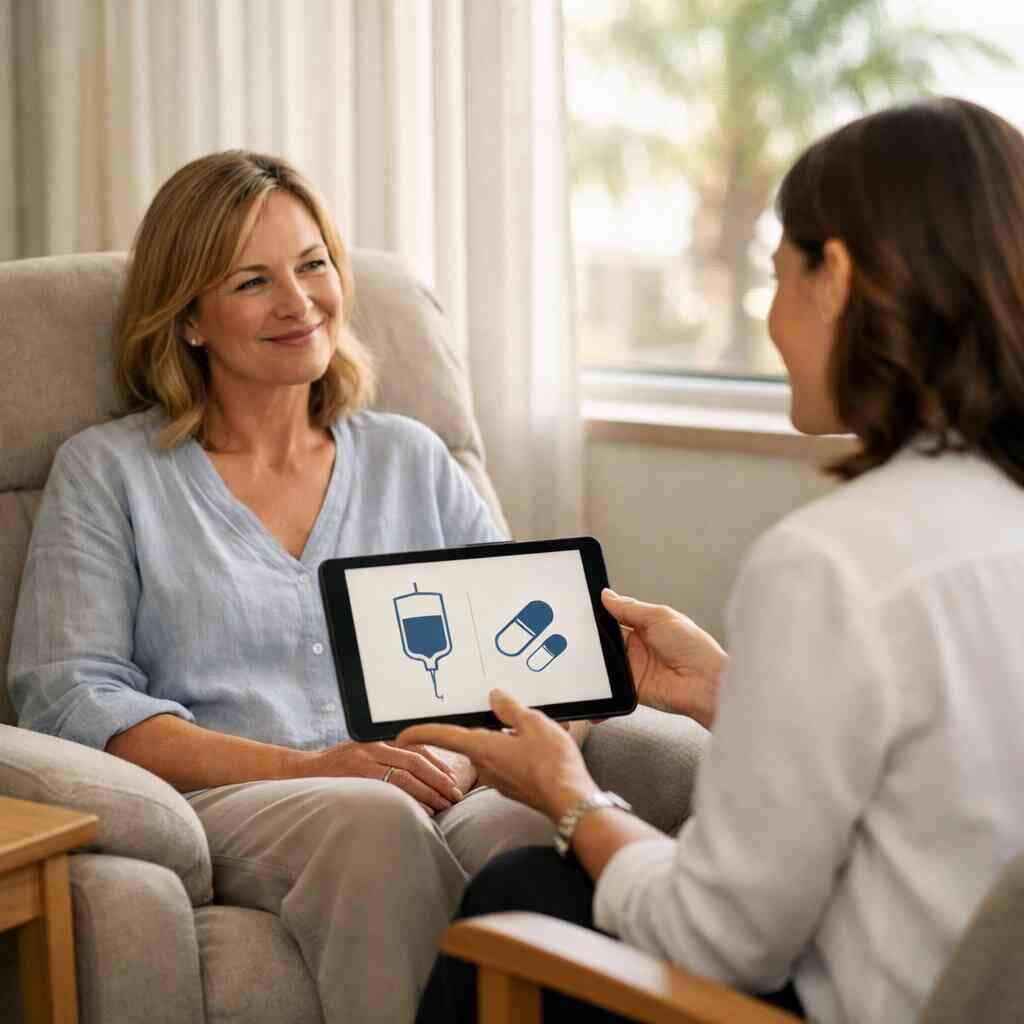
Here is the part many first-time callers miss: a lower per-dose price does not always mean a lower total cost of ketamine therapy. More visits, more travel, or less predictable response can raise the real-world expense. If you want a structured estimate conversation, how much ketamine treatment costs in Florida is useful before you decide. For insurance questions, the admissions team can usually help clarify what is realistic.
Driving after ketamine treatment, cognitive effects, and how long ketamine effects last in real life
Do not plan to drive after treatment until your clinic clears you. Ketamine can affect judgment, coordination, and reaction time even after the strongest dissociation passes. Some people feel clear within hours. Others feel foggy longer. That is why driving after ketamine treatment is a safety issue, not a convenience issue. Arrange a ride and keep the rest of your day light.
As for how long ketamine effects last, the answer depends on route, dose, your condition, and whether you are in an acute or maintenance phase. Some people feel symptom relief quickly, then notice it taper over days or weeks. Others need a structured series before the pattern becomes more obvious. Cognitive effects are usually temporary, but they deserve respect. If you want a practical recovery timeline, the safe driving after ketamine treatment and recovery timing page gives helpful guidance.
Choosing the path that fits your symptoms, schedule, and long-term stability
Who may be better suited for ketamine infusions versus oral ketamine based on psychiatric evaluation and medication management needs
A good fit begins with screening. If you have severe depression, frequent suicidal thoughts, a complex medication history, or unstable symptoms, ketamine infusions may offer more structured oversight. If you need a more flexible schedule and your clinician feels your risk profile supports it, oral ketamine may be considered. Neither route should be chosen casually. A psychiatric evaluation and ongoing medication management are essential.
People with bipolar depression, OCD, PTSD, or mixed anxiety symptoms may need especially careful monitoring. The mistake we see most often is treating ketamine like a simple prescription instead of a monitored intervention. That is not wise. It is also why a clinic should talk openly about conditions like dual diagnosis, concurrent medications, and medical history before anything starts. If depression is central, the what is ketamine therapy for TRD in Florida page can frame the conversation.
When to ask about ketamine-assisted psychotherapy, integration therapy, and holistic therapy alongside treatment
Medication can open a window. Therapy helps you use it. That is where ketamine-assisted psychotherapy, integration therapy, and holistic therapy can become meaningful. These supports help you process what shifts during treatment, especially if trauma, grief, or old patterns rise to the surface. Some people need this layer more than they expected. Others simply need the option available.
If your symptoms include PTSD, anxiety, or longstanding relational pain, ask whether therapy pairing makes sense. The right approach may include CBT, DBT, family therapy, or trauma-focused work after the acute phase. That does not make ketamine “more spiritual” or less medical. It makes it more complete. For readers wanting a deeper look, why Ketamine Florida recommends integration therapy is worth reviewing.
What Florida patients should consider about telehealth ketamine, at-home ketamine, and safety ketamine rules before starting
Telehealth ketamine and at-home ketamine raise extra questions. Convenience is appealing, especially for people who live farther from Miami, Orlando, or Jacksonville clinics. But convenience cannot outrun safety. You should know who is prescribing, how monitoring works, what emergency instructions exist, and whether the plan is legal and clinically appropriate in Florida. I cannot overstate this part.
Florida patients should also think about substance risk, transportation, and whether someone trustworthy can be nearby when needed. If a program feels casual about monitoring, that is a warning sign. Safety ketamine planning should include clear instructions, follow-up access, and realistic limits. Florida law and telemedicine rules can change, so ask the clinic how they handle compliance rather than assuming. If you are comparing care models, ask about areas we serve and where supervision actually occurs.
How to spot misuse risks like ketamine addiction, Special K abuse, ketamine withdrawal, and when rehab for ketamine, detox, or outpatient program support matters
Special K abuse and Super K abuse are not the same as supervised medical ketamine therapy, but the distinction can blur when someone starts using repeatedly outside care. Is ketamine addictive? It can be, especially with recreational use, escalating dose, or using it to escape distress. Ketamine withdrawal can include cravings, low mood, agitation, and sleep disruption. Ketamine overdose is also a real risk, especially when mixed with alcohol, opioids, or unknown substances. Misuse can damage the bladder, memory, and daily functioning.
If you are worried about ketamine addiction, detox, rehab for ketamine, residential treatment, or an outpatient program may be appropriate. Dual diagnosis care matters when mental health symptoms and substance use are tangled together. Rehab should also include aftercare, relapse prevention, and often family therapy. We take that seriously because the people who need help most are often the ones who feel most embarrassed asking. For support pathways, the ultimate guide to ketamine Florida and addiction recovery page is the right place to start.
What a thoughtful next move looks like if you are comparing options for depression, PTSD, anxiety, chronic pain, or dual diagnosis care
The right next move is rarely dramatic. It is usually disciplined. Make a short list of clinics. Ask about route options, screening, safety, and follow-up. Confirm whether they treat depression, PTSD, anxiety, OCD, bipolar depression, chronic pain, CRPS, fibromyalgia, or migraine in a way that matches your needs. Then compare how each clinic handles access, cost, and support after treatment.
If you are in South Florida, Fort Lauderdale, Tampa, or Jacksonville, look for a clinic that can explain why one route fits better than another. If you need help organizing questions, start with one call and write down the answers. You do not have to decide everything today. You do need a plan that feels grounded. If you are ready to compare options more closely, Ketamine Florida can help you think through what is medically reasonable and practically livable.
Frequently Asked Questions
Question: How do ketamine infusions compare with oral ketamine for treatment-resistant depression, TRD, and major depressive disorder?
Answer: Ketamine infusions and oral ketamine both use the same medicine, but they are not the same treatment experience. IV ketamine enters the bloodstream directly, which usually makes the onset faster and the dose more predictable. Oral ketamine passes through digestion and liver metabolism, so absorption can be more variable and the effects may feel slower or less intense. For people with treatment-resistant depression, TRD, or severe major depressive disorder, that difference can matter a lot. Ketamine Florida helps patients compare options based on symptom severity, safety ketamine needs, and real-life scheduling concerns rather than using a one-size-fits-all approach. A psychiatric evaluation and careful medication management are important before choosing either route.
Question: In How to Compare Ketamine Infusions and Oral Ketamine, which route may be better for anxiety, PTSD, OCD, bipolar depression, or chronic pain conditions like CRPS, fibromyalgia, and migraine?
Answer: The best route depends on the condition, how urgent the symptoms are, and how much clinic supervision you need. IV ketamine is often considered when someone needs a more structured, closely monitored experience, especially for severe anxiety, PTSD, OCD, bipolar depression, chronic pain, CRPS, fibromyalgia, or migraine. Oral ketamine may be considered when convenience, access, or lower clinic time are major priorities. At Ketamine Florida, the team looks at your full history, including any dual diagnosis concerns, to help determine whether ketamine treatment is appropriate and whether ketamine-assisted psychotherapy or integration therapy should be part of the plan. The goal is not to promise a result, but to help you choose the route that best fits your symptoms and safety needs.
Question: What should I know about ketamine therapy side effects, dissociation, and safety ketamine monitoring before starting ketamine infusions or oral ketamine?
Answer: Both ketamine infusions and oral ketamine can cause dissociation, dizziness, nausea, temporary confusion, and cognitive effects. The intensity can differ by route, with IV ketamine often creating a more immediate and sometimes stronger experience. That is why guided sessions and in-clinic monitoring matter so much. Ketamine Florida emphasizes safety ketamine screening, clear preparation, and follow-up planning so patients know what to expect before, during, and after treatment. It is also important to discuss long-term effects ketamine, bladder cystitis ketamine, and urinary tract damage concerns, especially if ketamine is being used repeatedly or outside medical supervision. If you are wondering will I hallucinate on ketamine, the answer is that experiences vary, and your care team should explain what is typical and what is not.
Question: Is ketamine therapy FDA-approved, or is it off-label ketamine, and how does Spravato esketamine fit into the comparison with IV ketamine vs Spravato?
Answer: Traditional ketamine treatment for depression is generally off-label ketamine, while Spravato esketamine is an FDA-approved treatment for certain depression cases under specific conditions. That makes the comparison important for patients who are also thinking about insurance coverage ketamine, including questions about Spravato Medicare coverage. IV ketamine and Spravato are not identical, even though they work on related pathways. Ketamine Florida can help patients understand the differences in access, monitoring, and route of administration so they can make an informed choice. If you are comparing IV ketamine vs Spravato, it is wise to ask which option better matches your diagnosis, schedule, and coverage situation rather than assuming one is automatically better.
Question: How much does ketamine therapy cost, and are there self-pay ketamine, sliding scale, private pay, or financial assistance ketamine options in Florida?
Answer: The cost of ketamine therapy can vary because it depends on the treatment route, the number of visits, the amount of monitoring needed, and whether insurance coverage ketamine applies. In some cases, Spravato esketamine may be more likely to have coverage than IV ketamine or oral ketamine, but that still depends on the plan and medical necessity. For patients exploring self-pay ketamine, private pay, sliding scale, or financial assistance ketamine options, Ketamine Florida encourages a direct conversation about what is realistic before starting treatment. It is also important to understand that a lower per-visit cost does not always mean a lower total cost if more visits or more travel are required. Asking about location, follow-up care, and overall treatment plan can help you compare value more clearly.
Question: What should Florida patients ask a ketamine clinic Florida before choosing telehealth ketamine, at-home ketamine, or in-clinic ketamine infusions?
Answer: Florida patients should ask how the clinic handles psychiatric evaluation, medication management, monitoring, emergency instructions, and follow-up before deciding between telehealth ketamine, at-home ketamine, or in-clinic ketamine infusions. Safety should always come first, especially because ketamine can affect coordination, judgment, and cognition. It is also smart to ask whether the clinic treats conditions such as suicidality, PTSD, anxiety, bipolar depression, chronic pain, or dual diagnosis, and whether they offer aftercare, relapse prevention, family therapy, CBT, DBT, or holistic therapy when appropriate. At Ketamine Florida, the focus is on careful, compassionate care for Florida residents, including people in South Florida, Miami, Fort Lauderdale, Orlando, Tampa, Jacksonville, and West Palm Beach, so patients can make a grounded decision instead of a rushed one.