
When service-connected trauma meets sleepless nights and body pain, what kind of help actually fits a veteran
If depression has flattened your days and trauma has stolen your sleep, you may be exhausted from guessing. That exhaustion is real. So is the frustration. Veterans in South Florida often carry combat memories, chronic pain, and a nervous system that never fully stands down. At Ketamine Florida, we see how those pieces can overlap until ordinary treatment stops feeling like enough. The question is not just what helps. It is what helps safely, realistically, and with enough structure to matter.
Why combat-related PTSD and treatment-resistant depression often travel together in South Florida veterans
Combat-related PTSD and treatment-resistant depression in veterans often feed each other. Nightmares disrupt sleep, poor sleep worsens mood, and low mood makes trauma feel louder. In South Florida, heat, traffic, and inconsistent routines can add stress to an already strained system. Many people ask about South Florida veterans mental health support after they have already tried multiple medications or therapy models. That makes sense. The usual playbook can feel thin when the symptoms are layered.
One veteran we spoke with described lying awake near dawn, replaying convoy memories while his depression made everything feel pointless. He had tried two antidepressants and a sleep medication, yet the nights stayed long. That kind of story is common. It does not mean nothing can help. It means the treatment plan needs to match the reality of trauma, not just the diagnosis code.
How chronic pain, migraines, and fibromyalgia can keep old trauma locked in place
Pain changes behavior. It shortens patience, narrows attention, and makes every trigger feel closer. For some veterans, chronic pain, CRPS, fibromyalgia, and migraine are not separate from PTSD. They are part of the same trapped stress response. Many people searching for ketamine treatment for chronic pain and CRPS in South Florida are really asking for movement, sleep, and a little quiet in their own body. That is a reasonable ask.
Here is the part most people miss. When pain stays high, trauma recovery gets harder. Your body keeps learning that the world is unsafe. That is why veterans with migraine or widespread pain often ask about migraine relief with ketamine in Florida alongside depression care. We have seen patients in Broward who could not separate neck tension from panic symptoms. Once the pain plan improved, therapy became easier to absorb.
What ketamine therapy is and why some veterans ask about IV ketamine, Spravato esketamine, or oral ketamine after other treatments fall short
Ketamine therapy uses a medicine that acts as an NMDA receptor antagonist. That sounds technical because it is. In plain language, it can change how the brain processes pain, mood, and threat signals. Veterans often ask about IV ketamine, Spravato esketamine, or oral ketamine after standard options do not bring enough relief. That question is not unusual. It is often the sign of someone who has already worked hard.
Ketamine treatment is not magic, and it is not for everyone. Still, for some people with treatment-resistant depression, anxiety, or PTSD, it opens a window when nothing else has. The goal is not to chase a psychedelic experience. The goal is to create enough symptom relief that healing work becomes possible again. If you are comparing options in South Florida, you may also want to look at ketamine clinic options in Broward County or ketamine treatment options in Palm Beach County. Location matters when follow-up, transportation, and recovery time are part of the equation.
What Ketamine Florida can offer when the old playbook has stopped working
When standard care stalls, people often feel blamed by the system. That is unfair. A medication that helped once may stop helping later. Therapy can be valuable and still not be enough on its own. Ketamine Florida focuses on careful evaluation, thoughtful monitoring, and treatment planning that respects complexity. For veterans dealing with depression, anxiety, PTSD, OCD, or bipolar depression, that structure matters. So does honesty about what ketamine can and cannot do.
How psychiatric evaluation and medication management shape a safer plan for depression, anxiety, PTSD, OCD, and bipolar depression
A strong ketamine plan starts with a psychiatric evaluation. That means looking at symptoms, trauma history, sleep, substance use, medications, blood pressure, and medical risks. Medication management helps reduce avoidable problems, especially when someone is already taking antidepressants, mood stabilizers, or sleep medicines. Veterans with major depressive disorder, anxiety, PTSD, OCD, or bipolar depression can present very differently. A careful plan should reflect that.
We hear this from clients almost every week: “I just want someone to look at the whole picture.” That request is reasonable. It is also smart. Ketamine is not a substitute for clinical judgment. It works best when the team has enough information to screen for instability, check for interactions, and decide whether ketamine therapy, Spravato, or another option fits better. If depression is the dominant issue, it may also help to review treatment-resistant depression in veterans with a provider who understands the pattern.
Why the NMDA receptor antagonist effect matters for neuroplasticity, dissociation, and rapid symptom relief
Ketamine’s antidepressant effects are linked to its action as an NMDA receptor antagonist. Researchers believe this may support neuroplasticity, or the brain’s ability to form new connections. That matters because trauma and depression can make the brain feel locked in a narrow loop. Ketamine may interrupt that loop for some patients. It can also produce dissociation, which is why guided supervision is so important.
The 2000 Berman study and the later Murrough trial helped push ketamine into serious psychiatric discussion. That does not mean every person responds the same way. It does mean the science is stronger than casual internet summaries suggest. Some veterans notice changes quickly. Others need a longer treatment arc. The key is not to expect miracles. The key is to understand why the medicine is being considered in the first place. For readers who want a broader overview, ketamine on Wikipedia is a useful primer, though it should never replace medical guidance.
Where guided sessions, ketamine-assisted psychotherapy, and integration therapy can support trauma recovery without promising a miracle
Ketamine can create a brief opening. What happens around that opening matters. Guided sessions help patients feel oriented and monitored. Ketamine-assisted psychotherapy can help connect the medication experience to specific trauma work. Integration therapy helps people make sense of what came up, so the session does not fade into a memory without traction. That is especially important for veterans who have spent years surviving on autopilot.
One man from West Palm Beach told us he had no interest in “talking about feelings” until after treatment reduced the pressure in his chest. Then therapy became usable. That is not a guaranteed outcome. It is a pattern we have seen. The medicine did not do the healing alone. It made the healing reachable. Many patients also ask about integration therapy after ketamine sessions because they want the benefit to last beyond the appointment itself.
The practical questions veterans ask before they trust a ketamine clinic Florida
Practical questions are good questions. They keep people safe. They also reveal what matters most: cost, coverage, transport, timing, and aftercare. Veterans usually want clear answers before they commit to anything that affects their work, family, or driving. That is especially true in South Florida, where a clinic visit might involve bridge traffic, weather delays, and a long post-treatment ride home. The real world does not pause for mental health care. 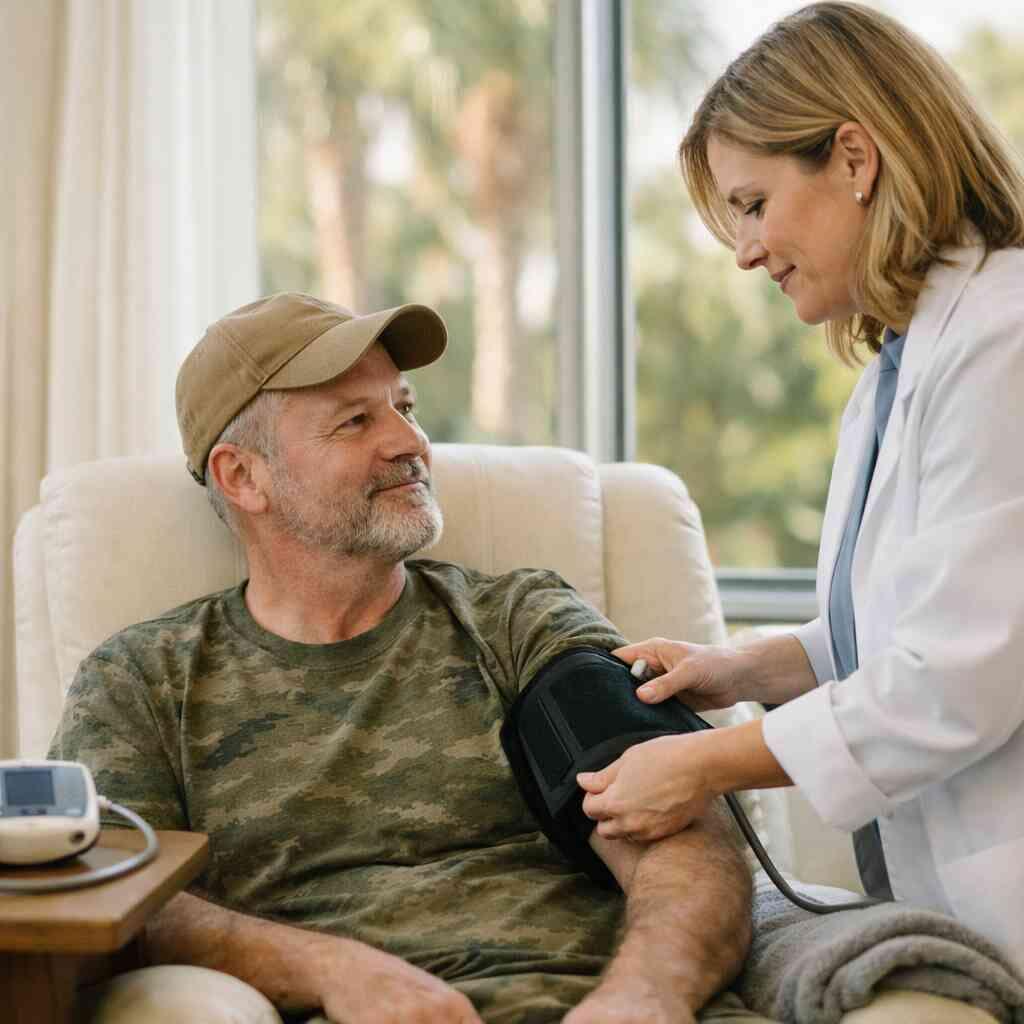
What FDA-approved Spravato means compared with off-label ketamine and why insurance coverage ketamine can differ
Spravato esketamine is FDA-approved for certain forms of treatment-resistant depression and depressive symptoms with suicidality, under specific conditions. By contrast, off-label ketamine for mental health is commonly used in clinics, but it is not FDA-approved for depression. That distinction affects documentation, monitoring, and often insurance coverage ketamine. Some people ask about insurance coverage for Spravato in Florida because benefits can be complicated and plan-specific. Medicare rules can also differ from private plans.
The key question is not which option sounds more advanced. It is which option fits your diagnosis, history, and coverage realities. Some veterans prefer a clinic that offers both the FDA-approved route and other monitored ketamine options. Others need to think about self-pay, private pay, sliding scale, or financial assistance ketamine resources. We cannot promise a universal price or universal coverage. We can say that clear admissions review prevents a lot of later stress.
OptionMain advantageMain limitationSpravatoFDA-approved, insurance may helpRequires monitored visits and plan approvalIV ketamineFlexible dosing in a supervised clinicOften self-pay or limited coverageOral ketamineEasier access for some patientsLess direct oversight, coverage varies### How many ketamine infusions for depression people often ask about and what changes the answer in real life
People often ask, “How many ketamine infusions for depression will I need?” That is understandable, but there is no honest one-size-fits-all answer. The number can change based on diagnosis, severity, prior treatment history, side effects, and whether the goal is acute relief or maintenance. Some patients begin with a short series, then reassess. Others need a different schedule. The answer should come from response, not from sales language.
The mistake we see most often is assuming the same schedule works for everyone. It does not. Veterans with longstanding PTSD and chronic pain may need more careful adjustment than someone treating depression alone. A stable plan also depends on logistics. If you live near Miami, Fort Lauderdale, or Orlando, follow-up may be easier than if you are driving from farther out. That convenience matters more than people think. It can determine whether treatment stays consistent.
What to know about side effects ketamine, driving after ketamine treatment, ketamine therapy side effects, and when safety concerns like bladder cystitis ketamine or cognitive effects matter
Common ketamine therapy side effects can include dizziness, nausea, blood pressure changes, sleepiness, and dissociation. Some people describe a floating feeling. Others feel detached or emotionally quiet. These effects usually pass, but they should still be planned for. That is why clinics discuss safety ketamine before treatment and give clear discharge instructions. If you want a practical guide, driving after ketamine treatment in Florida is a topic worth reviewing before your appointment.
More serious concerns are less common, but they matter. Repeated heavy use has been linked in the literature to bladder cystitis ketamine, urinary tract damage, and possible cognitive effects. There are also concerns about ketamine overdose and misuse when the drug is used recreationally as Special K or Super K. That is why screening and monitoring matter. It is also why the question “Is ketamine addictive?” deserves an honest answer. Yes, misuse can happen. So can dependence in the wrong setting.
How Florida access points in Miami, Fort Lauderdale, West Palm Beach, Orlando, Tampa, and Jacksonville can affect convenience and follow-up care
South Florida access is not just about geography. It shapes recovery. A veteran in Miami may need a different rhythm than someone in West Palm Beach or Fort Lauderdale. Someone traveling from Tampa or Jacksonville may need to think carefully about follow-up and transportation. In Florida, convenience affects continuity. Continuity affects outcomes. That is true for any clinic, and especially true for treatments that require monitoring.
If you are trying to compare local options, ask about appointment flow, transportation needs, and follow-up planning. Ask how the clinic handles reassessment. Ask whether they coordinate with primary care or psychiatry when needed. These questions are practical, not fussy. They are the difference between a plan that sounds good and a plan that actually fits your life in Florida. For some readers, ketamine treatment options in Orange County may also be part of the search if travel patterns point inland.
The next right move for a veteran who wants relief without guessing
The best next move is usually the one that matches your symptoms, your history, and your support system. Not the loudest option. Not the fastest promise. Veterans deserve treatment decisions that feel grounded. That includes understanding when ketamine makes sense, when it does not, and when another level of care is more appropriate. There is relief in having a plan that does not ask you to pretend everything is simple.
How to decide between ketamine infusions, Spravato, telehealth ketamine, or a different level of care based on symptoms and history
If you have severe depression, active suicidality, or complex trauma, supervised treatment often makes the most sense. If insurance is a major factor, Spravato may deserve a closer look. If access is the main barrier, telehealth ketamine may come up in discussion, though it is not right for every patient and not every state or condition. If you are managing major medical instability, a different level of care may be safer. The decision should follow clinical fit, not marketing language.
A quick comparison can help:
- Ketamine infusions: often chosen for close monitoring and flexible dosing.
- Spravato: useful when FDA-approved treatment and insurance alignment matter.
- Telehealth ketamine: sometimes considered for continuity, but not ideal for every case.
- Other care levels: inpatient or partial hospitalization may be better when risk is high.
If you are in crisis, the right move may not be ketamine at all. It may be urgent psychiatric care or a higher level of support first.
When addiction recovery support becomes part of the conversation for ketamine misuse, detox, or dual diagnosis treatment
Some veterans come in for mood symptoms and also have a history of recreational ketamine use. That changes the conversation. Ketamine addiction, Special K addiction, and Super K abuse can create serious problems, including withdrawal symptoms, bladder injury, and escalating tolerance. In those cases, rehab for ketamine may require detox, residential treatment, or an outpatient program depending on severity. If you want to see how this is addressed more broadly, Ultimate Guide to Ketamine Florida | Ketamine Therapy and Addiction Recovery in South Florida is a helpful starting point.
Dual diagnosis care becomes important when substance use and depression overlap. ASAM-style thinking helps here: treat the whole person, not just the drug. That may include psychiatric care, medication management, and structured relapse prevention. If ketamine is being misused, the goal is stabilization before any therapeutic use is considered. That is not judgment. It is safety.
How family support, aftercare, relapse prevention, CBT, DBT, and holistic therapy can help protect progress after treatment
Progress lasts longer when support continues after the session. Aftercare helps translate relief into routine. Relapse prevention gives you a plan for bad days. Family therapy can teach loved ones how to respond without overreacting or disappearing. Cognitive behavioral therapy and DBT can help with thought patterns, emotional regulation, and distress tolerance. Holistic therapy may also support sleep, movement, and stress reduction.
Here is what almost no online guide mentions: family support often improves follow-through more than motivation alone. A spouse who understands discharge instructions. A parent who can drive you home. A sibling who helps track appointments. Those small details matter. Ketamine Florida’s role is not to promise perfect outcomes. It is to provide a safer, clearer path for veterans who are tired of guessing. If you want a structured, humane conversation about options, start by asking for a psychiatric evaluation and talking through your goals, your risks, and your support at home.
Frequently Asked Questions
Question: How does How Ketamine Florida Supports Veterans in South Florida address combat-related PTSD, treatment-resistant depression in veterans, and chronic pain together?
Answer: Ketamine Florida looks at the full picture rather than treating each symptom in isolation. For many veterans, combat-related PTSD, major depressive disorder, anxiety, and chronic pain such as CRPS, fibromyalgia, or migraine can reinforce one another. That is why a careful psychiatric evaluation and medication management review are important before any ketamine treatment plan is considered. Ketamine therapy may help interrupt the cycle for some people by supporting neuroplasticity through its NMDA receptor antagonist activity, but it is not a guaranteed outcome and it is not the right fit for everyone. In practical terms, veterans may discuss IV ketamine, Spravato esketamine, or other monitored options depending on symptoms, medical history, and access needs. When appropriate, ketamine-assisted psychotherapy and integration therapy can help connect symptom relief to trauma recovery work. The goal is to create a safer, structured plan that supports veteran mental wellness, not to promise a miracle.
Question: What is the difference between Spravato esketamine, off-label ketamine, and IV ketamine at a ketamine clinic Florida veterans might consider?
Answer: The biggest difference is regulatory status and how the treatment is delivered. Spravato esketamine is FDA-approved for certain cases of treatment-resistant depression, while off-label ketamine and IV ketamine are commonly used in clinical settings for mood disorder care and chronic pain, but they are not FDA-approved for depression. That distinction can affect insurance coverage ketamine, monitoring requirements, and whether a plan may include Spravato Medicare coverage or private pay options. Some veterans prefer ketamine infusions because they want a supervised setting with guided sessions and closer observation for safety ketamine concerns such as dissociation or ketamine therapy side effects. Others ask about oral ketamine or telehealth ketamine when access is a barrier, though not every approach is appropriate for every patient. A responsible provider should explain the benefits, limitations, and uncertainties clearly, including that there is no universal answer for how quickly does ketamine work or how long do ketamine effects last. The right choice depends on diagnosis, risk factors, and logistics, not marketing language.
Question: Is ketamine legal Florida, and what safety concerns should veterans ask about before treatment?
Answer: Ketamine is legal in Florida when prescribed and administered appropriately in a clinical setting, but that does not mean every use is the same or suitable for every person. Veterans should ask about psychiatric evaluation, medication management, and how the clinic screens for issues such as substance use, suicidality, bipolar depression, or other conditions that may affect treatment planning. It is also smart to ask about side effects ketamine, including nausea, dizziness, blood pressure changes, dissociation, and ketamine therapy side effects. More serious concerns like bladder cystitis ketamine, urinary tract damage, cognitive effects, ketamine overdose, and ketamine withdrawal are more associated with misuse or repeated heavy nonmedical use, but they still deserve a direct conversation. A trustworthy Florida ketamine center should also give clear guidance on driving after ketamine treatment and whether you will need transportation home. Safety should always come before convenience.
Question: How much should veterans expect to pay for ketamine treatment, and what insurance coverage ketamine options may exist in South Florida?
Answer: The cost of ketamine therapy can vary depending on the treatment type, monitoring needs, and whether a patient is considering Spravato esketamine, ketamine infusions, or another approach. Because exact pricing can differ by clinic and by plan, it is best to ask directly about self-pay ketamine, private pay, sliding scale, and any financial assistance ketamine resources that may be available. Insurance coverage ketamine may be more likely for FDA-approved options such as Spravato, but coverage rules vary widely by plan and by medical necessity criteria. Some veterans in South Florida also ask about coverage through Medicare or employer plans, especially when access to Miami ketamine, Fort Lauderdale ketamine, or West Palm Beach ketamine care matters. A transparent clinic should explain what is known, what is not known, and what documentation may be required. Cost should be discussed openly so there are no surprises during treatment planning.
Question: What support does Ketamine Florida offer after treatment for veteran mental wellness and trauma recovery?
Answer: Support after treatment matters because ketamine therapy works best when it is part of a broader recovery plan. That is where aftercare, relapse prevention, family therapy, cognitive behavioral therapy, DBT, and holistic therapy can help veterans translate short-term relief into longer-term progress. Some patients benefit from ketamine-assisted psychotherapy or integration therapy after guided sessions so they can process trauma recovery in a more grounded way. Family support for veterans can also make a major difference, especially when loved ones understand how to help with appointments, transportation, and follow-up routines. For veterans with dual diagnosis concerns, a treatment plan may also include addiction recovery support, detox, residential treatment, or an outpatient program if ketamine addiction, Special K addiction, or Super K abuse is part of the picture. Ketamine Florida’s role is to provide a structured, compassionate path that respects complexity and helps patients move forward with realistic expectations.