If depression has flattened your days, or ketamine has stopped feeling therapeutic and started feeling risky, this topic gets personal fast. You may be tired, confused, and a little skeptical. That reaction makes sense. People often search for ketamine therapy and ketamine treatment at the exact moment they need clear answers, not hype.
When ketamine can help and when addiction is the real problem
The difference between ketamine therapy and ketamine misuse
Ketamine therapy is a medically supervised treatment. Ketamine misuse is something different entirely. In a ketamine clinic Florida patients can trust, the goal is symptom relief, safety, and careful monitoring. Misuse usually means using ketamine outside a medical plan, often in repeated or escalating doses. That shift matters because the brain and body respond very differently when ketamine is prescribed versus abused.
The term ketamine also gets mixed up online. You may hear Special K, Super K abuse, or even people asking whether ketamine is addictive. The honest answer is that it can be. That risk rises when use becomes frequent, secretive, or tied to chasing a high instead of treating a diagnosis. If that sounds familiar, the concern is not moral failure. It is a clinical problem that deserves real attention. For a deeper look at warning signs, see ketamine addiction recovery and withdrawal warning signs.
Why Special K, Super K abuse, and repeated use can change the brain and body
Repeated ketamine use can change how your brain responds to stress, reward, and dissociation. It can also affect the bladder, memory, and judgment. Ketamine withdrawal is not always discussed as openly as it should be, but people can experience cravings, irritability, sleep problems, and mood swings when they stop. Over time, ketamine overdose becomes a concern too, especially if other substances are involved. That is why misuse is never just a “party habit.”
Here is what almost no online guide mentions clearly enough: repeated use can change the body long before someone realizes the pattern is dangerous. We have seen people dismiss early symptoms because the drug seemed “less risky” than opioids or alcohol. One young adult from South Florida came in describing foggy thinking, bladder pain, and escalating use after social weekends. The exam suggested the problem was bigger than mood alone. The safest next step was a structured dual diagnosis plan, not another round of self-management.
How treatment-resistant depression and trauma recovery can look from the outside
Treatment-resistant depression and trauma recovery can look invisible from the outside. You may still get up, answer messages, and show up at work. Inside, though, it feels like everything has been muted. That is why TRD, major depressive disorder, anxiety, and PTSD often bring people to ketamine care after other treatments have fallen short. The exhaustion is real. So is the hope.
One client in the Palm Beach area described it as “functioning with the color drained out.” That phrase stays with me because it captures what many people cannot put into clinical language. People with OCD, bipolar depression, or trauma symptoms may also cycle through medication changes and therapy sessions without enough relief. A careful plan can help sort out whether ketamine is appropriate, whether another treatment fits better, or whether both need to happen together. If depression is the main issue, this ketamine therapy in Florida for treatment-resistant depression and trauma recovery page is a useful place to start.
When chronic pain, suicidality, or mood disorder symptoms need a different plan
Ketamine is not only about mood. It is also discussed for chronic pain, CRPS, fibromyalgia, and migraine. Still, pain plus despair can create a dangerous combination. If suicidality is present, the plan must prioritize immediate safety, psychiatric assessment, and close follow-up. That is where medication management and a psychiatric evaluation matter more than any trend online.
The hard truth is that no single pathway fits everyone. Some people need holistic therapy plus psychiatric care. Others need a different medication strategy, a higher level of care, or addiction treatment first. In our experience, the biggest mistake is trying to force a one-size-fits-all solution onto a changing clinical picture. If you are in that uncertain middle, that uncertainty is a reason to slow down, not a reason to give up.
What actually happens in a ketamine clinic Florida patients can trust
The psychiatric evaluation and medication management that come before treatment
A trustworthy clinic starts with questions, not promises. The first step is usually a detailed psychiatric evaluation. That includes your diagnosis, history, medications, substance use, sleep, blood pressure, and safety concerns. Good care also reviews whether you are dealing with depression, trauma, pain, or something more complicated. That matters because ketamine should fit the person, not the other way around.
You should expect the conversation to be calm and specific. A clinician may ask about past reactions to antidepressants, current therapy, and whether you need closer monitoring. That is also where health professionals and psychiatric medication management come in. If you are in Florida, you want a clinic that understands local access patterns, follow-up needs, and the reality that many patients are commuting from places like Miami, Orlando, Tampa, or Jacksonville. For people exploring anxiety, PTSD, or OCD care, this ketamine treatment in Florida for anxiety, PTSD, and OCD resource can help frame the discussion.
IV ketamine, oral ketamine, intramuscular ketamine, and Spravato esketamine compared
Ketamine care is not one thing. IV ketamine, oral ketamine, intramuscular ketamine, and Spravato esketamine each have different practical tradeoffs. IV ketamine is often discussed for rapid, closely monitored administration. Oral ketamine may be used in some settings, but it is less standardized. Intramuscular ketamine is another route some clinics consider. Spravato esketamine is FDA-approved for certain depression indications and has its own REMS-style supervision requirements.
OptionTypical settingMain advantageMain limitationIV ketamineClinic-basedPrecise monitoringUsually off-labelOral ketamineSelected casesEasier administrationLess standardizedIntramuscular ketamineClinic-basedFaster than oral in some casesLess commonly usedSpravato esketamineCertified settingFDA-approved optionStructured monitoring, access rulesIf you are comparing IV ketamine vs Spravato, this IV ketamine and Spravato compared for treatment-resistant depression page explains the practical differences in more detail. For some people, the right fit depends on insurance, diagnosis, and comfort with the treatment setting.
Why guided sessions and monitoring matter for safety ketamine and side effects ketamine
People sometimes imagine ketamine as simple or casual. It is neither. Safety ketamine means monitoring blood pressure, mental status, and recovery time. It also means planning for side effects ketamine like dizziness, nausea, temporary confusion, or changes in perception. This is why guided sessions matter so much. You should know who is observing you, what they are watching for, and what happens if you feel unwell.
The mistake we see most often is minimizing the after-effects. A person may feel “fine” within an hour and assume they can drive, work, or make big decisions. That is not always safe. Florida weather, traffic, and long drives on I-95 or across the bridges can make a sedating effect more dangerous than people expect. If you want a practical look at recovery precautions, use this ketamine therapy side effects, safety, and driving after treatment guide.
What dissociation and a psychedelic experience may feel like without the hype
Dissociation is not the same as “losing control,” and it is not always pleasant. Some patients describe floating, detachment, or slowed time. Others notice vivid inner imagery or a psychedelic experience that feels intense but manageable in a quiet room. That is why the setting matters. A guided environment reduces fear and helps you stay oriented.
A patient in the Broward area once told us the experience felt “weird but oddly calm,” which is a common description. That does not mean everyone enjoys it, and it does not mean the session should feel dramatic. The point is therapeutic change, not spectacle. If you are asking, “Will I hallucinate on ketamine?” the answer is that altered perception can happen, but not everyone experiences it the same way. The team should explain that plainly before treatment starts.
Why ketamine is used for depression, PTSD, OCD, bipolar depression, and pain
How the NMDA receptor antagonist effect may support neuroplasticity
Ketamine is a noncompetitive N-methyl-D-aspartate (NMDA) receptor antagonist. That sounds technical, but the key idea is simpler: it may shift how brain circuits communicate. Researchers think this can support neuroplasticity, which is the brain’s ability to form new connections. For people stuck in rigid loops of depression, trauma, or pain, that matters.
This is why people talk about ketamine therapy and neuroplasticity in mood disorder care. The treatment may create a window where thoughts and emotions become less fixed. That window can be used for therapy, reflection, and behavior change. It is not magic. It is biology meeting structure. For a closer look at this mechanism, see ketamine therapy and neuroplasticity in mood disorder care.
What the early Berman trial and later Murrough findings changed in mental health care
The early Berman trial helped show that ketamine could reduce depressive symptoms quickly in some patients. Later Murrough findings added more weight to the conversation around TRD. Those studies did not prove ketamine is a cure. They did help move it from fringe curiosity into serious psychiatric discussion. That shift changed practice across the country, including in Florida.
What this means for you is practical. Ketamine is usually considered after other treatments have not helped enough. It can also be part of a broader plan for depression or trauma recovery. If you are comparing treatment options, keep your eye on the goal: relief that is clinically monitored, not improvised. That is especially important when major depressive disorder and trauma symptoms overlap.
Where ketamine fits for anxiety, PTSD, OCD, migraine, CRPS, and fibromyalgia
Ketamine may be considered for anxiety, PTSD, OCD, migraine, CRPS, and fibromyalgia when symptoms are persistent and standard care has not been enough. It is also discussed for some mood disorders, including bipolar depression in carefully selected patients. That said, ketamine is not the default for every diagnosis. It should fit a specific clinical need. 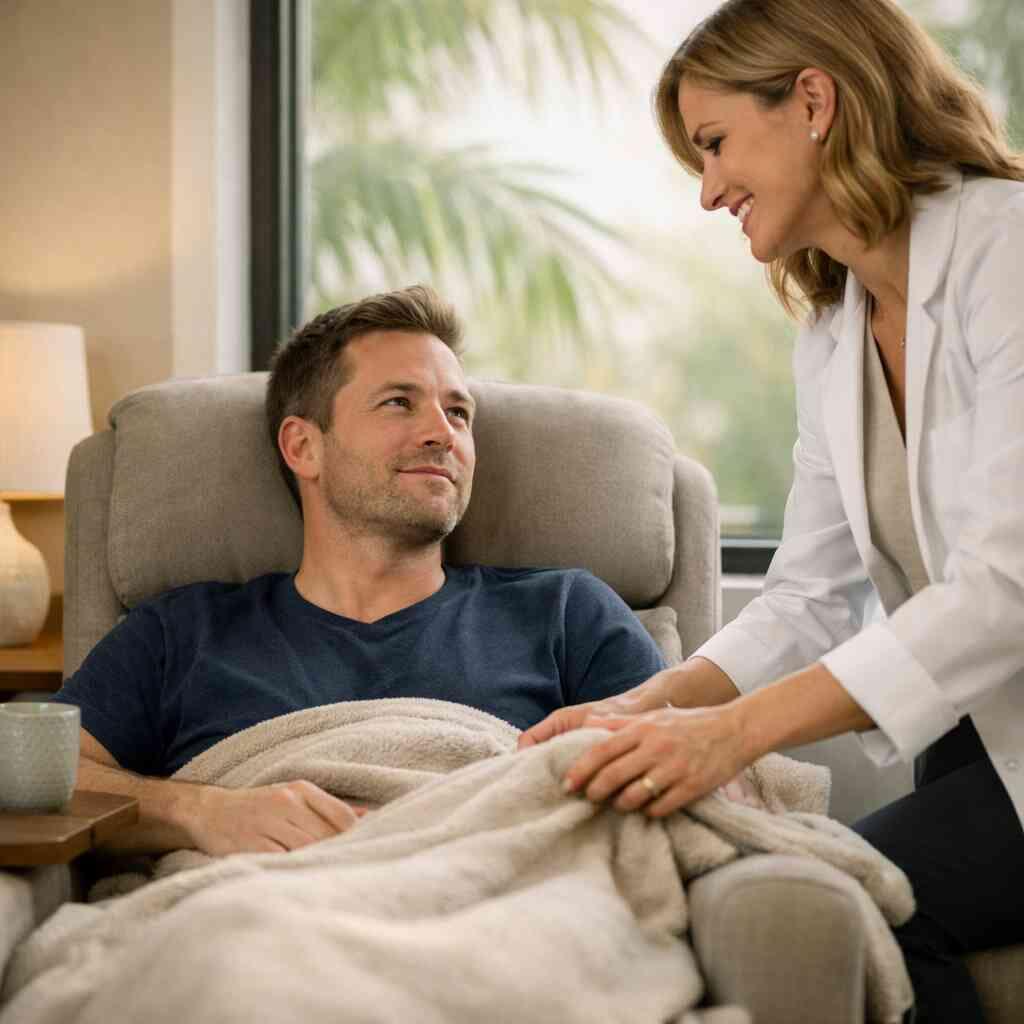
If pain is a major part of the picture, a clinic may discuss ketamine therapy in Florida for chronic pain, CRPS, and fibromyalgia. If headaches are the dominant problem, this ketamine therapy in Florida for migraine and headache relief page is relevant. For mood disorders, the path may look different. The core point is matching the treatment to the diagnosis, the severity, and the whole person in front of the clinician.
Why ketamine-assisted psychotherapy and integration therapy can matter after the infusion
The infusion is only part of the work. Ketamine-assisted psychotherapy and integration therapy can help you make sense of what surfaces during treatment. Some people notice grief, insight, or a temporary loosening of defensive thinking. Without follow-up, those moments can fade. With follow-up, they can become useful. This is where structure helps most. Therapy can include CBT, trauma-focused work, journaling, or practical behavior planning. For PTSD, many people benefit from approaches such as Cognitive Processing Therapy alongside medical treatment. For OCD, exposure-based therapy may still matter. Ketamine can open a door, but therapy helps you walk through it. If PTSD is your main concern, this ketamine clinic in Florida for PTSD recovery and guided sessions page is a solid next read. The decision points people in Florida ask about before they commit
Is ketamine legal Florida and what off-label ketamine really means
Yes, ketamine is legal in Florida when it is prescribed and administered appropriately. The important question is not legality in the abstract. It is whether the clinic uses it within medical standards, proper supervision, and sound documentation. Off-label ketamine means a clinician uses a medication for a condition or route not specifically approved by the FDA. That is common in medicine, but it still requires judgment and caution.
People often ask if off-label means experimental. Not exactly. It means the use is outside the exact labeling, even when evidence supports it. That is why a thorough evaluation matters so much. You deserve to know why a treatment is being recommended and what alternatives exist. You also deserve to know if a clinic is treating depression, pain, or addiction recovery with a clear clinical rationale.
FDA-approved Spravato versus IV ketamine and what insurance coverage ketamine may look like
Spravato is FDA-approved for certain depression indications, and esketamine gained FDA breakthrough therapy status before that broader acceptance. IV ketamine remains off-label for depression in many settings. That difference matters for access and payment. Insurance coverage ketamine may be more available for FDA-approved Spravato than for IV infusions, but policies vary. For Florida patients, Spravato Medicare coverage questions are especially common.
Cost is often the sticking point. People ask about the cost of ketamine therapy, self-pay ketamine, private pay, sliding scale, and financial assistance ketamine options. Exact pricing varies by clinic and treatment plan, so it is best to ask directly rather than rely on internet estimates. If you need help sorting out benefits, this Spravato Medicare coverage in Florida and insurance questions page may help you prepare. If you are comparing payment routes, ask for a written benefits review before you commit.
How many ketamine infusions for depression people often ask about and why there is no universal answer
One of the most common questions is, how many ketamine infusions for depression are needed? There is no universal answer. Some people notice change quickly. Others need a fuller series before anyone can judge the response. A few do not respond enough and need another plan. That variability is frustrating, but it is also honest medicine.
The best clinics avoid promising a fixed number. They reassess symptoms, function, side effects, and goals after each step. They also pay attention to whether the problem is actually depression alone or depression plus trauma, pain, or substance use. If a clinic gives you a neat number without a real evaluation, be careful. Your brain does not come with a preset package deal.
How quickly does ketamine work, how long do ketamine effects last, and when driving after ketamine treatment is not safe
People also ask how quickly ketamine works and how long ketamine effects last. Some people feel shifts within hours or days. Others notice benefits that rise and fall before stabilizing. That timing depends on the person, the diagnosis, the treatment route, and what happens after the session. For a helpful overview, see how fast ketamine works for depression and how long results last.
Driving after ketamine treatment is not safe until the clinic says you are clear. That warning is not ceremonial. It reflects real concerns about reaction time, perception, and judgment. If you live in South Florida and are trying to get home through traffic after a session, arrange a ride in advance. A responsible clinic will make that expectation clear before you arrive.
When ketamine addiction recovery needs more than willpower
Signs that ketamine addiction or ketamine withdrawal may be showing up
Ketamine addiction does not always look dramatic at first. It can start with using more often than planned, chasing dissociation, or hiding the amount used. Ketamine withdrawal symptoms may include irritability, cravings, sleep disruption, anxiety, and low mood. If you are asking whether Special K addiction or Super K abuse is happening, that question itself deserves attention.
A few warning signs are especially important:
- Using despite bladder pain or memory problems
- Needing larger amounts for the same effect
- Feeling panicked when supply runs low
- Prioritizing ketamine over work, family, or safety
- Mixing ketamine with other substances
If this sounds close to home, the issue may no longer be about self-control. It may be about clinical support and a safer structure.
Why ketamine overdose, bladder cystitis ketamine, urinary tract damage, and cognitive effects are serious concerns
People sometimes underestimate ketamine because it is discussed in psychiatric care. But misuse can still be dangerous. Bladder cystitis ketamine is a real concern, and so is urinary tract damage with heavy repeated use. Cognitive effects can include memory issues, trouble concentrating, and slowed thinking. Those problems can outlast the high and disrupt daily life.
This is where honesty matters more than reassurance. If a person is repeatedly using ketamine, the risks can become cumulative. That is especially true when other substances are involved or when the person already has depression or trauma. For a focused review of symptoms and next steps, see ketamine misuse and withdrawal symptoms explained.
How rehab for ketamine can include detox, residential treatment, outpatient program, dual diagnosis, and aftercare
Rehab for ketamine is not one-size-fits-all. Some people need detox support first. Others need residential treatment because the environment itself is too triggering. Many people do better in an outpatient program if they can stay safe at home. When mental health symptoms and substance use overlap, dual diagnosis care becomes essential. That is especially true for depression, trauma, anxiety, and polysubstance use.
The goal is not punishment. It is stabilization. Strong programs also include aftercare because recovery does not end when the acute cravings ease. If addiction is part of your picture, this ketamine addiction recovery and withdrawal warning signs page can help you think clearly about the options. You do not have to sort through it alone, and you do not have to sort through it all today.
Why relapse prevention, family therapy, CBT, DBT, and holistic therapy can support long-term stability
Recovery works better when it is practical. Relapse prevention can include trigger planning, routine changes, and safer social boundaries. Family therapy helps relatives respond without panic or enabling. CBT and DBT can teach skills for cravings, distress, and emotional regulation. Holistic therapy may support sleep, movement, breathwork, and stress reduction when used alongside clinical care.
The best outcomes often come from layering support. Medication may help. Therapy may help. Structure definitely helps. If you are coming out of ketamine misuse, the plan should also address shame, because shame keeps people isolated. Isolation is where relapse tends to grow.
What to do next if you need help with ketamine treatment, rehab, or a safer plan forward
If you are comparing ketamine as treatment and ketamine as a problem, start with a straightforward assessment. Ask for a psychiatric evaluation. Ask about medication management. Ask whether your symptoms point more toward ketamine therapy, addiction recovery, or both. If you are in Florida, a clinic should be able to explain whether they handle therapeutic care, addiction concerns, or referrals for both.
A good next move is simple: write down your symptoms, your current medications, and your questions about safety. Then make one call. If you need depression care, pain support, or addiction treatment guidance, Ketamine Florida can help you think through the safest path. Start with a clinic conversation, bring your concerns honestly, and let the plan be built around your actual needs.
Frequently Asked Questions
Question: What does the blog title What Does Ketamine Florida | Ketamine Therapy and Addiction Recovery Mean, and how does ketamine therapy differ from ketamine addiction recovery?
Answer: The title reflects two different but related needs: getting help through ketamine therapy and getting help when ketamine use has become harmful. At Ketamine Florida, ketamine therapy is a medically supervised treatment approach that may be considered for conditions like treatment-resistant depression, TRD, major depressive disorder, anxiety, PTSD, OCD, bipolar depression, chronic pain, CRPS, fibromyalgia, migraine, and suicidality. Ketamine addiction recovery, on the other hand, focuses on misuse, dependence, ketamine withdrawal, and the need for rehab for ketamine, detox, residential treatment, outpatient program, or dual diagnosis care. In both situations, the emphasis is on careful assessment, safety ketamine, and compassionate support rather than hype. A trusted ketamine clinic Florida patients can rely on should start with a psychiatric evaluation and medication management plan so the treatment matches the person, not the trend.
Question: Is ketamine legal Florida, and what should I know about off-label ketamine, FDA-approved Spravato esketamine, and IV ketamine vs Spravato?
Answer: Yes, ketamine is legal in Florida when it is prescribed and administered appropriately by qualified health professionals within medical standards. The key question is not simply legality, but whether the clinic uses it responsibly and with proper supervision. Off-label ketamine means a clinician is using ketamine for a purpose or route that is not specifically FDA-approved, which is common in medicine but still requires careful clinical judgment. Spravato esketamine is FDA-approved for certain depression indications, and many patients ask about IV ketamine vs Spravato when comparing options. Each approach has different monitoring needs, access rules, and insurance coverage ketamine considerations. Ketamine Florida can help you understand the difference between ketamine infusions, Spravato esketamine, oral ketamine, and intramuscular ketamine so you can make an informed decision based on diagnosis, safety, and practical access.
Question: How quickly does ketamine work, how long do ketamine effects last, and how many ketamine infusions for depression are usually needed?
Answer: People often want to know how quickly ketamine works and how long ketamine effects last because they are looking for relief after a long period of struggling. Some patients notice changes within hours or days, while others need a full treatment series before a meaningful response can be assessed. There is no universal answer to how many ketamine infusions for depression are needed because the right plan depends on your diagnosis, symptom severity, treatment history, and whether there are other concerns like trauma recovery, chronic pain, or substance use. A responsible ketamine clinic Florida patients trust will not promise guaranteed outcomes or a fixed number of sessions. Instead, the team should monitor your progress, side effects ketamine, function, and safety over time so the plan can be adjusted as needed.
Question: What can I expect during ketamine infusions, and will I hallucinate on ketamine or feel dissociation during guided sessions?
Answer: During ketamine infusions, the experience is often described as a dissociation or altered state rather than a traditional sleep or sedation response. Some patients notice a psychedelic experience, slowed time, floating sensations, or a sense of detachment, while others feel only mild changes. Will I hallucinate on ketamine is a common question, and the honest answer is that perception can change, but not everyone has vivid hallucinations. This is why guided sessions matter so much. A supervised Florida ketamine center should explain what is happening, monitor safety ketamine concerns, and prepare you for side effects ketamine such as dizziness, nausea, temporary confusion, or changes in perception. Ketamine Florida’s approach emphasizes clear education, calm monitoring, and support before, during, and after treatment so the experience stays therapeutic and structured.
Question: How does ketamine therapy support neuroplasticity, ketamine-assisted psychotherapy, and trauma recovery for anxiety, PTSD, and OCD?
Answer: Ketamine is a noncompetitive N-methyl-D-aspartate (NMDA) receptor antagonist, and researchers believe that its effect on the brain may help support neuroplasticity, or the brain’s ability to form new connections. That is one reason ketamine therapy is being discussed in the context of mood disorder care and trauma recovery. For patients with anxiety, PTSD, OCD, or treatment-resistant depression, ketamine-assisted psychotherapy and integration therapy may help make the benefits of treatment more usable in daily life. The infusion or session may create a window where thoughts feel less fixed, and therapy can help you work through what surfaces. Ketamine Florida supports a thoughtful, evidence-informed approach that combines medical oversight, medication management, and follow-up care instead of relying on ketamine alone.
Question: What are the warning signs of ketamine addiction, ketamine withdrawal, or ketamine overdose, and when is rehab for ketamine needed?
Answer: Warning signs of ketamine addiction can include using more than planned, craving the dissociative effects, hiding use, escalating doses, or continuing despite problems like bladder cystitis ketamine, urinary tract damage, memory issues, or cognitive effects. Ketamine withdrawal may involve irritability, sleep disruption, anxiety, cravings, and low mood when use stops. Ketamine overdose is also a serious concern, especially when ketamine is mixed with other substances or used in unsafe settings. If these patterns are present, rehab for ketamine may be appropriate and can include detox, residential treatment, an outpatient program, dual diagnosis support, aftercare, relapse prevention, family therapy, CBT, DBT, and holistic therapy. Ketamine Florida encourages anyone worried about Special K addiction or Super K abuse to seek a psychiatric evaluation promptly so the next step is based on safety and clinical needs rather than shame or guesswork.